




Cost-Benefit Analysis of AC Resonant Test System: ROI & Operating Cost Comparison
1. Industry Background: The Growing Cost Pressure in HV Testing
In power system operation, maintenance, and high-voltage electrical equipment testing, testing costs have become an increasingly critical concern. While traditional power-frequency withstand voltage test devices have lower initial purchase prices, they often face significant challenges when testing large-capacity, high-voltage equipment such as long-distance power cables, GIS switchgear, and large transformers-including high power supply capacity requirements, bulky equipment, excessive energy consumption, and difficult transportation.
Statistics show that over 85% of power engineering units face three major challenges in high-voltage testing: heavy equipment, high energy consumption, and multiple safety hazards. Traditional power-frequency test transformers require 3-4 personnel for搬运, and a single cable withstand voltage test can cost over 2,000 RMB in electricity alone. In this context, the AC Resonant Test System, leveraging its unique technical principles, is becoming the preferred choice for an increasing number of users seeking to reduce comprehensive testing costs and improve return on investment.
This article provides a systematic cost-benefit analysis of the AC Resonant Test System from multiple dimensions-initial investment, operating costs, maintenance expenses, and ROI payback period-offering professional reference for high-voltage test equipment procurement decisions.
2. Technical Principle: How Series Resonance Achieves Cost Savings
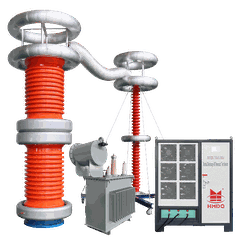
Understanding the cost advantages of the AC Resonant Test System begins with grasping its working principle. The system consists of a variable-frequency control power supply, excitation transformer, high-voltage reactor, and capacitive voltage divider. By adjusting the output frequency of the variable-frequency power supply, when the frequency matches the natural frequency of the LC circuit formed by the test object's capacitance and the reactor's inductance, series resonance occurs, and the total circuit impedance reaches its minimum.
In this state, the system demonstrates outstanding energy-saving characteristics:
Dramatically Reduced Power Supply Capacity: Under standard series resonance conditions, reactive power circulates in a closed loop between the reactor and the test object. The variable-frequency power supply only needs to compensate for minimal active losses, including line resistance and thermal loss. With a system quality factor (Q value) typically ranging from 20 to 40, input power is reduced to 1/20–1/10 of traditional devices.
Significantly Lower Energy Consumption: Under identical test voltage and capacity, the AC Resonant Test System reduces total energy consumption by 60%–80% compared with traditional power-frequency devices, requiring only 1/5–1/10 of the power supply capacity.
Substantially Reduced Size and Weight: The low-power design eliminates bulky heat dissipation structures and high-power transformers, reducing equipment volume and weight by over 50%.
These technical characteristics form the foundation of the AC Resonant Test System's competitive advantage in total cost of ownership.
3. Initial Investment Cost Analysis
3.1 Purchase Price Range
The price of an AC Resonant Test System varies based on technical specifications, voltage class, and capacity. In the domestic market:
Mid-range 110kV/1000kVA models are typically priced in the 150,000–220,000 RMB range.
High-end 220kV/3000kVA models generally range from 250,000 to 350,000 RMB.
Wider frequency adjustment ranges (30–300Hz) increase control system complexity, adding approximately 8%–12% to the price.
Capacitor banks using imported epoxy resin vacuum casting technology can increase the total system price by 15%–20%.
In the international market, a complete AC resonant test system typically ranges from $5,000 to $250,000, depending on power and configuration requirements.
3.2 Initial Cost Comparison with Traditional Equipment
It should be objectively noted that for the same capacity level, traditional power-frequency withstand voltage test devices generally have lower initial purchase prices than variable-frequency series resonant systems. However, this difference is primarily significant in the small-to-medium capacity range. For applications with capacities above 50kVA, the price of the AC Resonant Test System is not substantially higher than equivalent-capacity test transformer cabinets.
More importantly, comparing only purchase prices seriously underestimates the AC Resonant Test System's cost advantages during the operational phase. A true cost-benefit assessment must adopt a Total Cost of Ownership (TCO) perspective.
4. Operating Cost Savings Analysis
4.1 Energy Cost Savings
Energy consumption is a continuous and significant expense in high-voltage testing. The AC Resonant Test System excels in this area:
For a 10kV/1km cable test, conventional power-frequency testing consumes 35 kW·h, while resonant technology requires only 8 kW·h.
-实测 data from a State Grid subsidiary shows annual testing electricity expenses reduced by 41%.
In a 220kV substation cable test project, required power capacity dropped from 500kVA to 50kVA.
4.2 Labor and Transportation Cost Savings
The AC Resonant Test System features modular design, with individual components weighing less than 40 kg-an 80% reduction compared to traditional equipment. Field test data from a Wuhan engineering team shows that for the same testing workload, equipment transport personnel decreased from 6 to 2, and site transfer time was reduced by 67%.
In contrast, traditional power-frequency test transformers weigh over 200 kg per unit, requiring dedicated transport vehicles and multiple personnel. In mountainous areas, equipment arrival can take up to 3 days. This difference is particularly significant in remote substations, cable tunnels, and other sites with limited accessibility.
4.3 Maintenance Cost Savings
The AC Resonant Test System also demonstrates clear advantages in maintenance costs:
High-end models have a Mean Time Between Failures (MTBF) of up to 8,000 hours-60% longer than economy models-reducing annual maintenance costs by 20,000–30,000 RMB.
Energy-efficient models using SiC power devices can save 15%–20% on test electricity consumption, recovering the price difference within two years.
The ROI payback period for quality after-sales service typically ranges from 2–3 years.
4.4 Hidden Cost Savings from Enhanced Safety
When a fault occurs during traditional testing methods, short-circuit current can surge by 50 times. In the past three years, 67% of electrical shock incidents in the industry occurred during withstand voltage testing. In contrast, when flashover or breakdown occurs in the AC Resonant Test System, resonance conditions are immediately disrupted, high voltage rapidly decreases, and fault current is extremely limited, effectively protecting both the test object and the equipment itself. This safety feature not only reduces accident risk but also minimizes repair costs and downtime losses from equipment damage.
5. Return on Investment (ROI) Quantitative Analysis
5.1 Payback Period
Based on multiple project data sets, the payback period for the AC Resonant Test System typically ranges from 2 to 4 years:
Industry data shows that the ROI payback period for quality after-sales service is typically 2–3 years.
A variable-frequency series resonant AC withstand voltage test device project achieved a post-tax payback period of 3.86 years, with a post-tax internal rate of return of 34.42%.
Another series resonant device project achieved a payback period of 3.38 years with an internal rate of return of 39.82%.
5.2 Total Cost of Ownership Comparison
Professional assessments recommend using a 10-year lifecycle for cost accounting. Over this period:
Equipment Procurement Cost: The initial investment in a series resonant system is higher than traditional power-frequency equipment, but the gap narrows progressively in the early operational phase.
Energy Cost: Based on average annual energy savings of 60%–80%, the cumulative electricity savings over 10 years are substantial.
Labor Cost: Equipment lightweighting带来的 personnel reduction and efficiency improvements yield significant annual labor savings.
Maintenance Cost: Higher reliability and lower failure rates result in annual maintenance expenses significantly below those of traditional equipment.
Considering all factors, over a 10-year total cost of ownership lifecycle, the AC Resonant Test System typically has a lower total cost than traditional power-frequency test equipment-and the larger the test capacity and the higher the usage frequency, the more pronounced the cost advantage.
6. Economic Analysis of Key Application Scenarios
Scenario 1: Power Cable AC Withstand Voltage Testing
Long-distance high-voltage cables have large capacitance, and traditional power-frequency equipment requires enormous power supply capacity. After adopting the AC Resonant Test System, a 10kV cable test reduced power consumption from 35 kW·h to 8 kW·h. At 100 tests per year, tens of thousands of RMB can be saved on electricity alone.
Scenario 2: GIS Switchgear On-Site Testing
In a 500kV substation field test, the traditional method required 8 heavy test transformers, while the resonant system required only 2 removable reactors-a 70% reduction in total weight and a 60% reduction in test time. The combined benefits of reduced equipment investment and shortened project timelines are extremely significant.
Scenario 3: Transformer AC Withstand Voltage Testing
After adopting variable-frequency series resonant technology for large and medium-sized transformers, required power supply capacity is greatly reduced, equipment size is significantly decreased, and no damage is caused to the test object. For manufacturing enterprises and power maintenance units that frequently conduct transformer tests, this translates into long-term cost savings.
7. Industry Trends: Cost-Effectiveness-Driven Technology Substitution
As power equipment moves toward higher voltage and larger capacity, the AC Resonant Test System, with its significant cost-effectiveness advantages, is accelerating the replacement of traditional power-frequency test equipment and becoming the mainstream choice in high-voltage withstand voltage testing. The global AC Resonant Test System market continues to grow, driven by users' urgent need to reduce comprehensive testing costs.
Meanwhile, the introduction of new technologies such as digital operations and predictive maintenance is further reducing long-term operating costs and shortening payback periods. For power enterprises planning high-voltage test equipment procurement, evaluating the AC Resonant Test System from a total cost of ownership perspective will help enable more forward-looking and cost-effective decisions.
8. Conclusion
While the AC Resonant Test System may have a higher initial procurement cost than traditional power-frequency test equipment, from a total cost of ownership perspective, its combined advantages in energy savings, labor reduction, maintenance cost savings, and safety make it a highly cost-effective choice in the high-voltage testing field. The payback period typically ranges from 2 to 4 years, with internal rates of return exceeding 30%.
For power enterprises facing large-capacity, high-voltage testing requirements, the AC Resonant Test System is not merely a technology upgrade-it is a financially sound investment that withstands rigorous economic scrutiny.


