

HM2680-10kVA/100kV Insulation Tool Test System: Automated Dielectric Testing for Electrical Safety Equipment
HM2680-10kVA/100kV Insulation Tool Test System
Electrical safety tools are regularly used by power utilities, electrical maintenance teams, substations, and industrial electrical workers. Insulating gloves, insulating boots, insulating mats, and operating rods provide protection against electrical hazards during inspection and maintenance.
However, insulation performance can deteriorate because of aging, mechanical damage, contamination, moisture, or improper storage.
Regular dielectric testing helps verify whether these safety tools meet the required electrical withstand conditions before being returned to service.
The HM2680-10kVA/100kV Insulation Tool Test System is designed for electrical safety tool testing. It combines a high-voltage test source, control and measurement functions, and supporting test fixtures to perform AC withstand voltage tests and monitor leakage current.
The system is intended for electrical safety testing laboratories, power utilities, maintenance departments, and organizations responsible for inspection of insulating protective equipment.
1. Equipment Overview
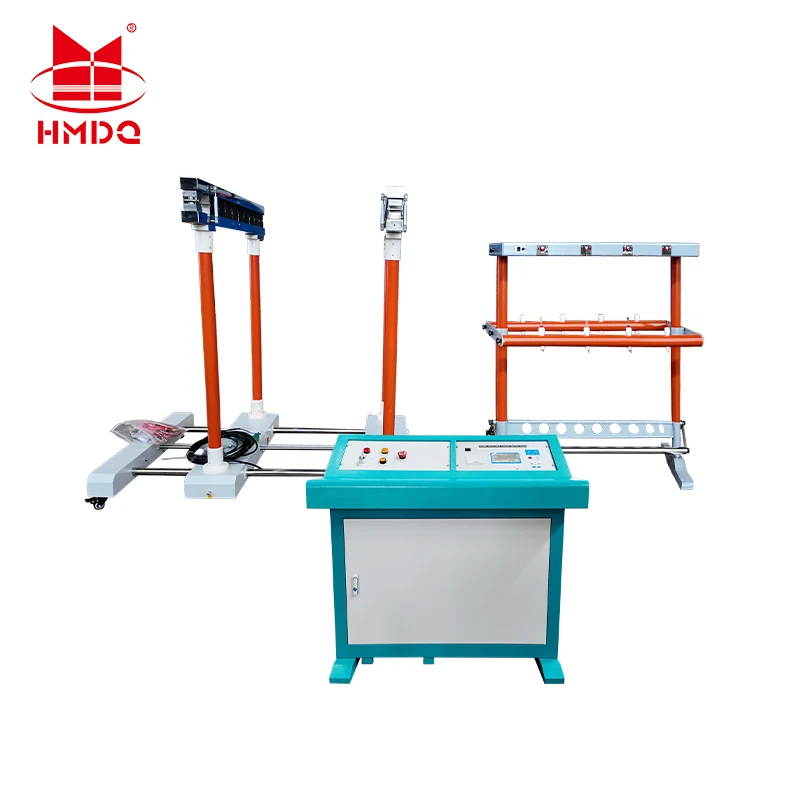
The HM2680 is a high-voltage testing system designed for insulation performance verification of electrical protective tools.
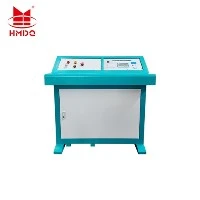
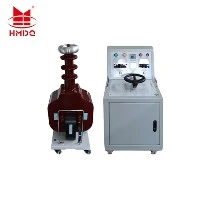
Its configuration is centered on a 10kVA control console and a 100kV test transformer, together with auxiliary equipment required for testing.
The system supports test applications involving:
Insulating gloves
Insulating boots
Insulating mats and pads
Insulating rods, subject to the appropriate fixture and configuration
Other electrical protective tools requiring dielectric withstand testing
The system is designed to provide controlled voltage application, leakage current monitoring, timed testing, and test result storage.
The purpose of the test is to evaluate electrical insulation performance under the prescribed conditions rather than to measure insulation resistance alone.
2. Main Technical Specifications
The published HM2680 system parameters include:
| Parameter | Specification |
|---|---|
| Model | HM2680-10kVA/100kV |
| Rated Output Voltage | 100kV |
| Rated Capacity | 10kVA |
| Output Voltage Range | Up to 100.0kV |
| Voltage Measurement Error | Less than ±(1.0% of reading + 0.1% of full scale) |
| Primary Current Measurement | 50.0A range |
| Current Measurement Error | Less than ±(0.5% of reading + 0.05% of full scale) |
| Leakage Current Range | 30.0mA |
| Leakage Current Resolution | 0.01mA |
| Leakage Current Measurement Error | ±(1.0% of reading + 0.1% of full scale) |
| Digital Timer | 10–990 seconds |
| Test Bench Area | 1100 × 1000 mm |
| Electrode Area | 600 × 600 mm |
| Display | Large-screen LCD |
| Test Channels | 8-channel leakage current display |
| Data Storage | 30 sets of test results |
These are published product specifications. The final delivered configuration and applicable measurement ranges should be confirmed against the approved technical document.
3. Testing Multiple Insulating Tools
Electrical safety testing departments often process multiple samples during routine inspection.
The HM2680 features an eight-channel leakage current measurement display, allowing the operator to monitor the leakage current associated with multiple test positions on the display.
The multi-channel arrangement supports centralized monitoring during a test.
Depending on the fixture and test configuration, the testing workflow can be organized for different insulation tool categories.
The practical benefits include:
Centralized leakage current monitoring
Reduced need to inspect individual measurement instruments
More organized sample positioning
Consistent test parameter management
Improved efficiency in repeated inspection work
The number of samples tested simultaneously must be confirmed for the specific test fixture, electrical connection, and test procedure.
4. Automated Test Operation
The HM2680 supports automatic withstand voltage test operation.
A typical automated test sequence includes:
Step 1 - Sample Preparation
Inspect the insulating tools, identify each sample, and prepare the required test electrodes and connections.
Step 2 - Parameter Setting
Set the test voltage, leakage current limit, and test duration according to the applicable procedure.
Step 3 - Voltage Ramp-Up
After the test starts, the system increases voltage according to the configured test procedure.
Step 4 - Voltage Holding
When the preset voltage is reached, the test timer starts and the voltage is maintained for the specified duration.
Step 5 - Leakage Current Monitoring
The system displays the leakage current of each configured test channel during the test.
Step 6 - Test Completion
After the test duration is completed, the system automatically reduces the voltage to zero and cuts off the output according to its operating sequence.
Step 7 - Result Recording
Test results are stored for subsequent review.
Automated test operation helps standardize repeated testing and reduce manual operation during the voltage ramp and timing stages.
5. Leakage Current Measurement and Test Evaluation
Leakage current is one of the main electrical parameters monitored during an insulation withstand test.
When high voltage is applied to an insulating sample, current may flow through the insulation and along its surface. The measured current can be affected by the sample condition, electrode arrangement, voltage level, environmental conditions, and test circuit.
The HM2680 provides leakage current monitoring for its configured test channels.
For electrical protective equipment, test acceptance should be determined according to the applicable standard, sample category, voltage level, test duration, and leakage current limits.
A leakage current measurement should not be interpreted independently of the test setup.
For example, insulating gloves, boots, mats, and rods may require different test fixtures, electrode arrangements, and acceptance criteria.
The test voltage and allowable leakage current must therefore be set according to the applicable requirements for each sample type.
6. Testing Different Types of Electrical Safety Tools
Insulating Gloves
Insulating gloves are used to protect personnel from electrical contact hazards.
Dielectric testing verifies their withstand capability under the prescribed test voltage.
The testing arrangement should include the appropriate electrodes and conductive medium where required by the applicable procedure.
The operator should inspect the gloves before testing and ensure that the test setup does not introduce unnecessary mechanical damage.
Insulating Boots
Insulating boots are used in electrical safety applications where protection against ground potential and electrical contact hazards is required.
The test arrangement must be appropriate for the boot construction, electrode positioning, and applicable test requirements.
Insulating Mats and Pads
Insulating mats and pads provide an additional insulation layer between personnel and ground.
Testing helps evaluate the dielectric withstand capability of the material under the specified conditions.
The test fixture should provide suitable electrode contact and sample positioning.
Insulating Rods and Operating Tools
Insulating rods and operating tools are used in electrical operation and maintenance.
Testing may require specialized electrode arrangements and control of the effective insulation length.
The system must be equipped with the appropriate fixture before performing insulating rod tests. A general test bench should not be assumed to support every rod length or voltage class without configuration confirmation.
7. Test Fixtures and Electrode Arrangement
The test fixture is an important part of the complete insulation tool testing system.
Different samples require different electrode structures and positioning methods.
For gloves, boots, and insulation mats, the test fixture must provide a suitable electrode arrangement while maintaining the prescribed electrical distance.
For insulating rods, the effective insulation length and electrode spacing are important parameters.
The test fixture should be designed to:
Position the sample consistently
Provide suitable electrical contact
Maintain the required electrode spacing
Reduce the risk of accidental contact
Support repeatable test conditions
Allow safe handling before and after testing
Fixture configuration should be selected according to the sample category and applicable testing procedure.
8. Safety Protection and System Design
High-voltage withstand testing requires a controlled testing environment.
The HM2680 published features include overvoltage and overcurrent protection, a high-voltage warning lamp, and a dedicated grounding container.
These functions help support safe test operation when used together with appropriate laboratory safety procedures.
The system also provides measurement of test voltage and primary current associated with the test transformer.
The operator should establish the test area, verify grounding, check the test fixture, and ensure that the samples are properly positioned before applying high voltage.
After the test, the test object and fixture must be discharged and verified safe before handling.
9. Test Data Management
Repeated inspection of electrical safety tools requires organized test records.
The HM2680 supports storage of up to 30 sets of test data and results for later inquiry.
Stored records can support:
Test result review
Routine inspection management
Sample traceability
Comparison of inspection results
Laboratory record keeping
For organizations handling large quantities of protective equipment, test records are useful for managing inspection schedules and documenting the status of electrical safety tools.
The available data storage capacity should be considered when planning the laboratory's record management process.
10. Where the HM2680 Is Used
Power Utilities
Electricity distribution companies and transmission organizations regularly inspect electrical protective equipment used by field personnel.
The HM2680 can support dielectric testing in centralized safety tool testing departments.
Electrical Maintenance Departments
Industrial facilities with electrical maintenance teams may use insulation tool testing equipment to verify the condition of their protective equipment.
Electrical Safety Laboratories
Third-party testing laboratories can use the system for routine testing, inspection, and evaluation of electrical protective tools.
Electrical Equipment Service Organizations
Organizations responsible for safety tool inspection, maintenance, and asset management may use the system to support repeated testing and record keeping.
11. Technical Selection Considerations
Before selecting an insulation tool test system, the testing organization should confirm the following requirements.
| Selection Factor | What to Confirm |
|---|---|
| Maximum test voltage | Required voltage for each sample category |
| Test capacity | Number of samples tested simultaneously |
| Leakage current range | Required measurement range and resolution |
| Test duration | Applicable test time and timer range |
| Sample categories | Gloves, boots, mats, rods, and other tools |
| Fixture arrangement | Required electrodes and sample positioning |
| Automation | Voltage ramp, timer, automatic shutdown |
| Protection | Overvoltage, overcurrent, and test-failure protection |
| Data storage | Number of test records and data management needs |
| Laboratory layout | Bench dimensions, grounding, and safety barriers |
The system should be configured according to the test requirements of the laboratory rather than selecting equipment based only on the maximum output voltage.
12. Goldhome Insulation Tool Testing Solutions
Wuhan Goldhome Hipot Electrical Co., Ltd. provides high-voltage testing equipment for power utilities, electrical manufacturers, maintenance organizations, and testing laboratories.
The HM2680-10kVA/100kV insulation tool test system is designed for dielectric withstand testing of electrical safety tools and protective equipment.
Its configuration combines high-voltage generation, voltage control, leakage current monitoring, timed testing, safety protection, and test result storage.
Goldhome can provide high-voltage test solutions for different electrical safety testing requirements, including insulating gloves, insulating boots, insulating mats, and other protective equipment.
Website: https://www.goldhomehipot.com
Conclusion
The HM2680-10kVA/100kV Insulation Tool Test System provides an integrated solution for electrical safety tool dielectric testing.
With 100kV rated output, 10kVA capacity, multi-channel leakage current monitoring, automatic test operation, protective functions, and test data storage, it supports organized inspection of insulating protective equipment.
For electrical safety laboratories and power utility maintenance departments, selecting the correct test fixtures, test voltage, leakage current criteria, and operating procedure is essential for reliable test results.