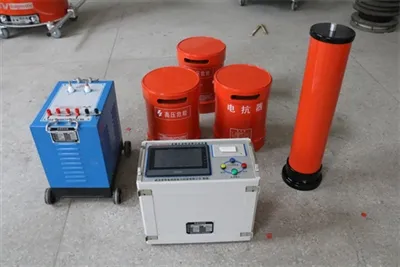
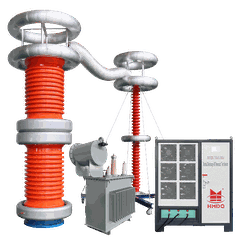



Voltage Levels of GIS Partial Discharge Fault Simulation Systems
In modern power systems, gas-insulated switchgear (GIS) has progressively become a vital component of high-voltage substations and distribution networks due to its outstanding performance and compact design. However, with the widespread adoption of GIS, the monitoring and analysis of partial discharge (PD) faults have become increasingly critical. Partial discharge refers to electrical discharge phenomena caused by uneven electric field strengths within electrical insulating materials. It typically occurs within or on the surface of insulators and may pose serious threats to the long-term operation of equipment. Therefore, constructing an effective GIS partial discharge fault simulation system, particularly the design of its voltage levels, is of great significance for ensuring the safety and reliability of power systems.

First, selecting appropriate voltage levels is a key factor in designing a GIS PD fault simulation system. Voltage levels directly impact the system's operational capability and simulation accuracy. When simulating partial discharges, electrical design must be based on the rated voltage of GIS equipment. Typically, GIS rated voltages fall into several common categories, such as 36 kV, 72.5 kV, 145 kV, and 245 kV. Therefore, the simulation system should cover these voltage levels to accommodate diverse application requirements.
Second, the characteristics of partial discharge in high-voltage environments differ significantly from those in low-voltage conditions. As voltage increases, the occurrence frequency, duration, and damage severity to insulating materials all escalate. Consequently, designing a partial discharge fault simulation system requires not only selecting appropriate voltage levels but also conducting detailed research on partial discharge behavior at different voltages. The system should utilize high-voltage experimental techniques to accurately simulate partial discharge behavior, providing a scientific basis for subsequent fault diagnosis and insulation assessment.
Additionally, other critical parameters of the simulation system should be adjusted accordingly with changes in voltage levels. For instance, the output capacity of the power supply, the sensitivity of measurement and monitoring equipment, and the response speed of protective devices must all be matched to the selected voltage level. This not only enhances system reliability but also effectively reduces failure risks caused by equipment incompatibility.
Finally, establishing and operating a partial discharge fault simulation system not only improves monitoring capabilities for the health status of GIS equipment and other high-voltage devices but also provides empirical evidence for developing new insulation materials and improving existing insulation technologies. With technological advancement and the continuous elevation of voltage levels, the simulation and analysis of partial discharge faults will become increasingly complex and critical. Therefore, when designing GIS partial discharge fault simulation systems, professionals should prioritize enhancing practical application effectiveness, ensuring the system can fully address challenges posed by diverse industry standards and real-world operational environments.
In summary, selecting the appropriate voltage level for GIS partial discharge fault simulation systems is fundamental to ensuring system performance and safety. Scientifically sound design will profoundly impact the stable operation of power systems. Future research and applications should focus on in-depth exploration of partial discharge behavior across different voltage levels, representing a critical area for enhancing power system reliability.