




What are the three types of transformer tests?
- Three Categories of Core Tests for Transformers: Routine Tests, Type Tests, and Special Tests
In the systems for transformer production, factory release, project acceptance, and operation and maintenance testing, all test items are uniformly classified into three major categories in accordance with IEC and national standards: routine tests, type tests, and special tests. For equipment purchasers, system integrators, and testing equipment suppliers, clearly distinguishing the applicable scenarios, testing objectives, and technical requirements of these three types of tests is essential for selecting appropriate testing equipment, ensuring product quality, and meeting project compliance and acceptance criteria.
Type testing is a batch sampling verification test that does not require testing of every individual unit; instead, it is conducted on a sample of transformers of the same model and manufactured using the same process. This test aims to verify whether the transformer's overall structural design, insulation withstand capability, and overall stability comply with industry standards, and to evaluate the product's operational performance under extreme conditions. It primarily includes demanding极限 tests such as lightning impulse tests, temperature rise tests, short-circuit withstand tests, and switching impulse withstand voltage tests. Type testing is crucial for verifying the reliability of a transformer model's design and obtaining product certification. It imposes higher requirements on the waveform accuracy, voltage stability, and withstand voltage multiplier of test equipment, and is primarily used for manufacturer qualification reviews and verification during bidding for high-standard projects.
Special tests are customized, optional tests without uniform mandatory standards; they are conducted as needed based on customer requirements, project classification, and specific operating conditions. These are primarily applied in high-end scenarios such as ultra-high-voltage power plants, renewable energy power plants, and critical industrial power supply systems. Key tests include partial discharge detection, frequency response testing, noise testing, and DC bias testing. Such tests are used to thoroughly screen for latent defects in equipment and accurately assess the operational stability of transformers under complex operating conditions, placing stringent demands on the testing equipment's immunity to interference, testing accuracy, and functional compatibility.
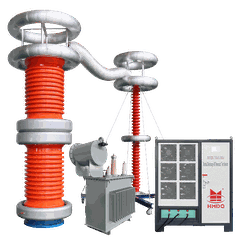
These three categories of tests, differing in level and complementing one another in purpose, constitute a comprehensive transformer quality inspection system. Among them, AC withstand voltage testing-as a core component spanning both routine and type testing-is compatible with variable-frequency resonance test systems. It meets the high-voltage testing requirements for factory acceptance, type approval, and on-site acceptance of transformers across all voltage ratings, making it the most versatile and compliant core equipment configuration in power testing engineering.


