

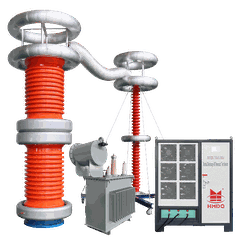


What is the AC withstand test of a transformer?
AC withstand voltage testing of transformers is a core mandatory test in the power industry designed to verify transformer insulation performance and ensure the safe operation of equipment. It is widely applied across the entire lifecycle of transformers, including factory acceptance testing, handover inspections for new construction projects, inspections following major overhauls, and periodic preventive maintenance. The primary objective of this test is to systematically verify the integrity and withstand voltage capability of the insulation structures in key areas of the transformer-such as the internal windings, core, and bushings-to accurately identify various latent insulation defects, rigorously determine whether the equipment meets grid-connection standards, and eliminate potential safety hazards in power operations at their source. It serves as a core measure for quality control and safe operation and maintenance of power equipment.
Transformers rely on insulating materials-such as internal insulating paper, insulating oil, and bushings-to achieve electrical isolation between the windings and the core, between the windings and the casing, and between the high- and low-voltage windings, thereby preventing faults such as short circuits, leakage currents, and breakdowns. During manufacturing, long-distance transportation, on-site installation, long-term operation, and major overhauls, transformers are highly susceptible to latent defects-such as moisture ingress, microscopic damage, internal voids, and insulation delamination-due to factors including external vibrations, humid environments, manufacturing deviations, and aging-related deterioration. These defects are extremely difficult to detect; conventional inspection methods such as visual inspection and insulation resistance testing cannot effectively identify them. However, once the equipment is connected to the grid and begins live operation, these minor defects will continue to deteriorate under the influence of long-term voltage loads and grid fluctuations, making it highly likely to trigger major safety incidents such as insulation breakdown, grid tripping, and equipment burnout. The AC withstand voltage test is the most direct and effective method for identifying such potential hazards.
The test operates on a simple principle and follows standardized evaluation criteria. During on-site operations, personnel apply power-frequency AC high voltage to the corresponding transformer windings as specified by national standards, with a standard stabilization period of one minute. The test voltage far exceeds the equipment's rated operating voltage, accurately simulating extreme operating conditions such as grid overvoltages, transient voltage surges, and load fluctuations, thereby forcing the exposure of weak points in the equipment's internal insulation. The test criteria are clear and straightforward: if no insulation breakdown, surface flashover, abnormal noises, or unusual heating occurs throughout the entire test process, the insulation performance is deemed pass; if any abnormalities occur, it indicates that the equipment has insulation defects. In such cases, the equipment must not be connected to the grid or put into operation; it may only be used after rectification and a follow-up inspection confirm it is pass
In transformer insulation testing systems, AC withstand voltage and DC withstand voltage are the two primary testing methods, with significant differences in their principles, testing results, and applicable scenarios. DC withstand voltage test equipment features a simple structure, compact size, and ease of transport; it is often used for basic inspections of aging cables but has extremely limited adaptability and is not suitable for precise transformer testing. The constant DC voltage it outputs cannot simulate the transformer's normal AC operating conditions and is highly prone to accumulating space charge within the insulation layer. Not only does this fail to identify subtle defects such as localized cracks, delamination, and aging, but the residual charge also distorts the internal electric field of the equipment, affecting the transformer's subsequent normal operation. Consequently, both testing accuracy and safety are compromised. In contrast, AC withstand voltage testing outputs a standard power-frequency sinusoidal AC voltage that fully aligns with the actual operating conditions of the power grid. It can comprehensively activate latent defects within the insulation layer, providing broader testing coverage and data that more closely reflects real-world operating conditions. At the same time, AC testing does not result in residual charge accumulation and does not cause secondary damage to the transformer's insulation, offering higher safety and reliability. It is currently the sole standard solution for transformer acceptance, overhaul, and preventive testing.
Currently, the industry has widely adopted AC resonance test equipment to replace traditional power-frequency withstand voltage equipment for transformer withstand voltage testing. This equipment utilizes the principle of resonance voltage boosting and offers advantages such as stable voltage output, pure and standard waveforms, low energy consumption, and a lightweight design. The testing process is smooth and gentle, causing no damage to the transformer's intact insulation structure, and it fully accommodates the testing requirements for transformers of all voltage levels, both high and low. Standardized AC withstand voltage testing enables the precise identification of non-compliant equipment, prevents equipment with hidden defects from being connected to the grid, and effectively mitigates issues such as power grid failures, equipment damage, and power outages. It comprehensively ensures the long-term, stable, safe, and efficient operation of transformers and the entire power system, serving as an indispensable key component in the quality control and operational maintenance of power equipment.


