


What is the AC proof voltage test?
- What is an AC withstand voltage test?
Simply put, an AC withstand voltage test involves applying an AC voltage to electrical equipment that is much higher than its normal operating voltage to determine whether its insulation can withstand it.
For example: A cable with a rated voltage of 10 kV operates at 10 kV. During an AC withstand voltage test, a voltage of over ten or even twenty kilovolts may be applied to it for one minute. If no breakdown or flashover occurs during this period, the insulation is deemed pass.
2.Why is this test conducted?
During long-term operation, the insulation in electrical equipment gradually ages and may develop localized defects such as moisture ingress, cracking, or contamination. These issues may not immediately become apparent during normal operation, but in the event of abnormal conditions-such as lightning strikes or switching overvoltages-insulation breakdown can occur, leading to equipment damage or even power outages.
The purpose of the AC withstand voltage test is to detect these potential hazards in advance. It is considered the most effective and direct method for assessing the insulation condition of electrical equipment.
3.Why use AC rather than DC?
The voltage waveform and frequency of an AC withstand voltage test match the conditions under which the equipment actually operates. Although DC withstand voltage testing is simpler to perform, the voltage distribution within the insulation under DC voltage differs from that during AC operation; therefore, it does not provide a test as close to real-world conditions as AC testing does. Therefore, for major equipment such as cables and transformers, industry standards prioritize AC withstand voltage testing.
4.How is the test conducted?
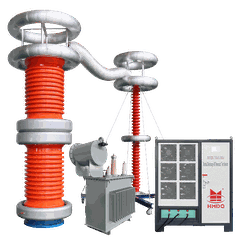
During the test, a high voltage is generated using a test transformer or a variable-frequency series resonance unit and applied to the equipment under test. The voltage is typically raised to 1.5 to 3 times the equipment's rated voltage and maintained for approximately 1 minute. If no insulation breakdown or flashover occurs during the test, the equipment is considered to have passed.
5.What precautions should be taken?
AC withstand voltage testing is somewhat destructive to insulation and is classified as a "destructive test." Therefore, before conducting this test, non-destructive tests-such as insulation resistance and leakage current tests-are usually performed first to confirm that there are no obvious issues before proceeding with the withstand voltage test.
In summary: An AC withstand voltage test "puts the equipment's insulation to the test" using an AC voltage significantly higher than normal. If the equipment withstands the voltage, it passes; if it fails, it indicates a potential hazard that needs to be addressed.