

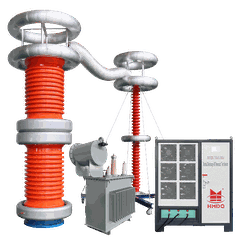



What is the 80% rule for transformers?
📝 Scenario 1: The "80% Rule" in Withstand Voltage Tests (Voltage Standard)
- This rule stipulates that the voltage used for on-site AC withstand voltage tests should be 80% of the factory test voltage.
- Key Reason: Factory tests are conducted under ideal conditions, whereas on-site tests are subject to environmental factors and transportation-related influences. Using 80% of the voltage effectively verifies insulation integrity while preventing unnecessary damage to the equipment.
- Typical Applications: Primarily applies to the neutral points of transformers rated at 110 kV and above, as well as dry-type transformers.
- Standard Basis: Primarily based on the national standards GB50150-2016 and the GB1094.3 series.
⚙️ Scenario 2: The "80% Rule" for Operational Use (Load Recommendation)
This rule recommends that a transformer's long-term load should not exceed 80% of its rated capacity.
Key Reasons:
- Prevent Overheating: Loads exceeding 80% cause a sharp increase in heat generation, accelerating insulation aging.
- Provide a Margin: Retaining 20% of capacity allows for short-term power spikes and prevents circuit breakers from tripping.
- Improving Energy Efficiency: Transformers typically operate more efficiently within the 75%–80% load range.
- Simple Example: For a transformer rated at 100 kVA, the recommended long-term load should not exceed 80 kVA.
In summary, the "80% rule" in withstand voltage testing is designed to safely and effectively verify insulation integrity, while the "80% rule" during operation is intended to ensure the long-term stable operation of the transformer.


