

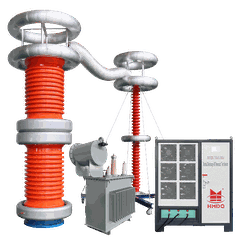



What is a high voltage test of a transformer?
High-voltage testing of transformers is an essential insulation verification test in the power industry, used to comprehensively evaluate the insulation integrity, electrical withstand capability, and overall operational reliability of power transformers and distribution transformers. These tests are conducted in strict accordance with international standards such as IEC and IEEE, and are widely applied in factory quality inspections, project delivery acceptance, on-site commissioning and debugging, and periodic preventive maintenance. For equipment purchasers, engineering integrators, and operations and maintenance (O&M) organizations, a clear understanding of the classification and technical rationale behind high-voltage transformer testing serves as a critical basis for equipment selection, project compliance acceptance, and the management of long-term operational risks.
In professional engineering applications, high-voltage transformer testing is primarily divided into three core categories: AC withstand voltage testing, DC withstand voltage testing, and impulse voltage testing. These three types of tests complement one another, forming a comprehensive high-voltage insulation testing system that covers the verification of insulation performance under both normal operating conditions and extreme operating conditions. Among these, the AC withstand voltage test simulates the power grid's 50/60 Hz power frequency operating voltage and short-duration overvoltage conditions. It specifically detects substantive defects-such as moisture ingress, cracking, and poor bonding-in core components like transformer windings and bushings, making it the key test for assessing the transformer's primary insulation performance.
DC withstand voltage tests differ significantly from AC withstand voltage tests in their application scenarios. This test equipment features low power consumption and convenient on-site deployment, and is primarily used for insulation screening of transformer casings and auxiliary components. However, since its DC output voltage cannot simulate the transformer's actual AC operating conditions, it cannot effectively detect latent insulation defects within the windings. Therefore, it can only serve as an auxiliary testing method and cannot be used as the basis for determining the overall compliance of the equipment. In contrast, lightning impulse and switching impulse tests apply ultra-high-voltage pulses instantaneously to verify a transformer's ability to withstand lightning surges and grid switching overvoltages, covering extreme operating scenarios that conventional withstand voltage tests cannot simulate.
In equipment procurement and on-site engineering applications, variable-frequency AC resonant withstand voltage testing has become the industry's mainstream and preferred solution. Compared to traditional power-frequency withstand voltage equipment, AC resonant test systems produce pure and stable output waveforms with high voltage accuracy. The testing process does not cause secondary damage to the transformer's intact insulation and fully meets the standardized testing requirements for transformer factory testing, factory acceptance testing (FAT), and on-site handover acceptance, making them suitable for testing transformers of all voltage levels.
Standardized high-voltage testing can identify potential transformer insulation hazards in advance, effectively preventing safety incidents such as insulation breakdown, fault tripping, and equipment burnout after the equipment is put into operation. It is the core testing method for determining the quality of transformer products and ensuring the long-term compliant and stable operation of the power grid, as well as a key technical standard for equipment selection and engineering acceptance in the industry.


