

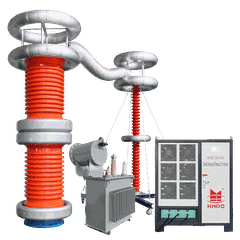


50kV DC High Voltage Hipot Test Set for Insulation Withstand Testing
1. What Is a DC Hi-Pot Test Set?
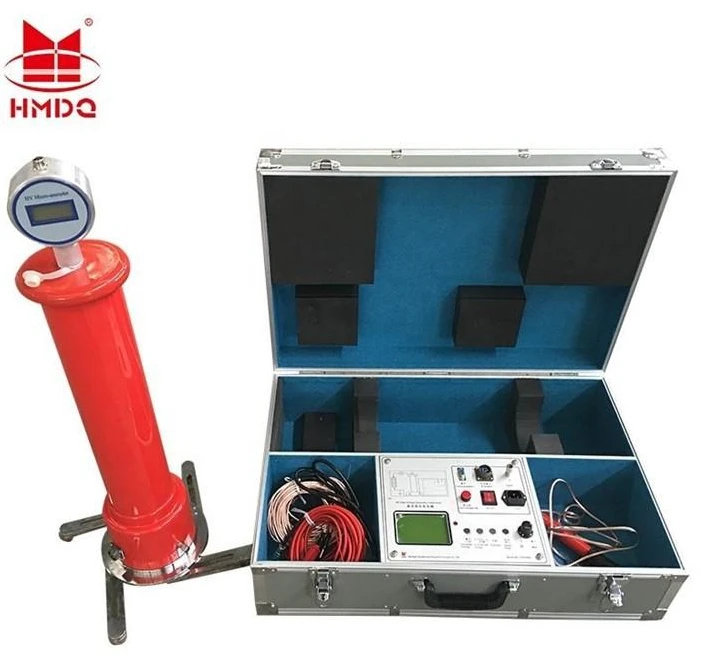
A DC Hi-Pot test set is a high-voltage testing instrument used to evaluate the dielectric withstand capability of electrical insulation.
The term Hi-Pot means high potential. During a DC withstand test, the equipment applies a specified direct voltage between insulated parts or between a conductor and ground for a defined period.
The purpose is to determine whether the insulation can withstand the required electrical stress without breakdown or disruptive discharge.
A 50 kV DC Hi-Pot test set provides a maximum rated output voltage of 50 kilovolts DC, subject to the equipment's rated operating conditions.
It is commonly considered for testing:
Electrical cables and cable accessories where DC testing is permitted
Insulating materials and components
Electrical switchgear components
Motors and generators
High-voltage electrical equipment
Laboratory insulation test samples
The appropriate test voltage and duration depend on the equipment under test, insulation material and applicable testing standard.
2. Working Principle of a 50 kV DC Hi-Pot Tester
A DC Hi-Pot tester converts an AC input supply into a controlled high-voltage DC output.
A typical system uses a high-voltage transformer, rectifier and voltage-multiplying circuit to generate the required DC voltage.
2.1 AC Input and Voltage Regulation
The input power supply is connected to the control unit. A voltage regulating circuit adjusts the input to the high-voltage generation section.
The control system allows the operator to increase or decrease the output voltage in a controlled manner.
2.2 High-Voltage Generation
The regulated AC voltage is applied to the high-voltage transformer.
The transformer increases the voltage to the required level. A rectifier circuit then converts the high-voltage AC into DC.
Depending on the system design, a voltage multiplier circuit may be used to achieve the required output voltage.
2.3 DC Voltage Measurement
A high-voltage DC divider measures the output voltage and provides a scaled signal to the measurement and control circuit.
Accurate voltage measurement is important because the applied test voltage must remain within the specified tolerance.
2.4 Leakage Current Measurement
When DC voltage is applied to an insulation sample, a current flows through the test circuit.
The measured current may include:
Capacitive charging current
Dielectric absorption current
Conduction or leakage current
As the test progresses, the charging and absorption components generally decrease. The remaining current can provide information about the insulation's electrical behavior.
A suitable measuring circuit allows the operator to monitor current changes during the test.
3. Main Components of a 50 kV DC Hi-Pot Test Set
A complete DC Hi-Pot system typically includes the following components.
| Component | Main Function |
|---|---|
| Control unit | Controls voltage regulation and test operation |
| High-voltage transformer | Provides the required high-voltage AC |
| Rectifier circuit | Converts AC into DC |
| Voltage multiplier | Increases DC output voltage where required by the design |
| High-voltage DC divider | Measures the output voltage |
| Current measuring circuit | Monitors leakage current |
| Protection circuit | Provides protection against abnormal operating conditions |
| Discharge circuit | Safely discharges stored electrical energy |
| Grounding system | Provides the required protective grounding arrangement |
The actual circuit configuration depends on the equipment design. Not every 50 kV DC tester uses the same transformer and multiplier arrangement.
4. Key Functions of a DC Hi-Pot Test Set
4.1 Adjustable DC Output Voltage
The output voltage should be adjustable so that the operator can follow the voltage levels specified by the test procedure.
For a 50 kV DC tester, the maximum rated output is 50 kV DC. The minimum adjustable voltage and regulation characteristics should be confirmed from the technical specification.
4.2 Leakage Current Measurement
Leakage current monitoring helps identify abnormal electrical behavior during the test.
A sudden increase in current, unstable readings or a protective trip may indicate insulation problems or a change in the test circuit.
The current measuring range and resolution should be selected according to the test object and expected current level.
4.3 Overcurrent and Overvoltage Protection
A DC Hi-Pot tester should include appropriate protection against abnormal test conditions.
Typical protection functions include:
Overcurrent protection
Overvoltage protection
Emergency stop
Output control and isolation
Grounding and safety interlock arrangements
Protection thresholds should be configured according to the equipment design and testing requirements.
4.4 Controlled Voltage Rise
The test voltage should be increased in a controlled manner.
A gradual voltage rise allows the operator to monitor the test object and identify abnormal current changes before reaching the specified test voltage.
The voltage ramp rate should follow the applicable test procedure.
4.5 Discharge and Grounding
After a DC withstand test, the test object may retain stored electrical charge.
The system must therefore include a suitable discharge arrangement. The test object should be discharged through an appropriate resistor and then grounded according to the operating procedure.
The operator must verify that the residual voltage has been reduced to a safe level before disconnecting the test leads.
5. Applications of a 50 kV DC Hi-Pot Tester
5.1 Power Cable Insulation Testing
DC high-voltage equipment has traditionally been used for cable insulation withstand testing and leakage current measurement.
However, the suitability of DC testing depends strongly on the cable insulation material and its condition.
For modern extruded XLPE cable systems, high-voltage DC withstand testing should not be assumed to be an appropriate commissioning or maintenance method. AC-based testing or other diagnostic methods may be specified instead.
The cable type, applicable standard and manufacturer's recommendations must be checked before selecting a test method.
5.2 Electrical Motor and Generator Testing
DC high-voltage testing equipment may be used for specified insulation tests on electrical rotating machines.
The test voltage and duration depend on the winding design, rated voltage, insulation condition and applicable standard.
5.3 Insulating Material Testing
A DC Hi-Pot test set can be used to evaluate the dielectric withstand capability of selected insulating materials and components.
Examples include insulation samples, insulating structures and electrical components with defined test electrodes.
5.4 Electrical Component Testing
Manufacturers and testing laboratories may use DC Hi-Pot equipment for dielectric testing of electrical components.
The test arrangement should be designed according to the component's construction and the required insulation test procedure.
6. DC Hi-Pot Testing Procedure
A typical DC withstand testing procedure includes the following steps.
Step 1: Check the test object
Inspect the insulation surface and confirm that the equipment under test is suitable for DC testing.
Step 2: Isolate the equipment
Disconnect the test object from other electrical circuits and remove connections that could affect the test or be damaged by the applied voltage.
Step 3: Connect the test leads
Connect the high-voltage output to the specified test point and establish the required grounding arrangement.
Step 4: Set the test parameters
Set the required test voltage, voltage ramp rate, test duration and protection limits according to the applicable procedure.
Step 5: Increase the DC voltage
Gradually increase the output voltage while monitoring the voltage and leakage current.
Step 6: Maintain the test voltage
Maintain the specified voltage for the required duration. Monitor current behavior and check for flashover, breakdown or abnormal readings.
Step 7: Reduce the voltage
After completing the test, reduce the output voltage to zero using the prescribed operating procedure.
Step 8: Discharge the test object
Use the designated discharge circuit and grounding arrangement. Verify that residual voltage has been removed before handling the test object.
Step 9: Record the results
Record the applied voltage, leakage current, test duration, environmental conditions and final test result.
The exact procedure must follow the applicable equipment-specific test standard. A generic procedure should not replace the manufacturer's operating instructions.
7. DC Hi-Pot Tester vs. AC Hi-Pot Tester
DC and AC Hi-Pot test sets apply different types of electrical stress. They are not interchangeable for every test application.
| Comparison | DC Hi-Pot Tester | AC Hi-Pot Tester |
|---|---|---|
| Output voltage | Direct voltage | Alternating voltage |
| Main measurement | DC leakage current | AC test current and related measurements |
| Charging current | Mainly transient during voltage rise | Continuous capacitive current for capacitive loads |
| Typical equipment structure | Transformer, rectifier and possible multiplier | AC high-voltage transformer and regulating system |
| Discharge requirement | Important after testing | Depends on the test circuit and equipment |
| Application | Specified DC insulation tests | Specified AC dielectric withstand tests |
The correct choice depends on the insulation system and test specification, not simply on the available output voltage.
8. How to Select a 50 kV DC Hi-Pot Test Set
Before purchasing a 50 kV DC high-voltage tester, engineers should review the following technical parameters.
8.1 Rated Output Voltage
Confirm whether 50 kV is the maximum DC output voltage and whether it refers to the rated positive-polarity output.
If negative-polarity testing is required, confirm that the equipment supports it.
8.2 Output Current
The required output current depends on the test object, its capacitance and leakage characteristics.
A higher output voltage does not automatically mean that the tester has sufficient current capacity for every load.
8.3 Voltage Measurement Accuracy
The voltage measurement system should have a defined accuracy or uncertainty specification.
The high-voltage divider and measuring instrument should be calibrated as part of the measurement system.
8.4 Leakage Current Measurement
Check the current measurement range, resolution and accuracy.
These parameters determine whether the instrument can monitor the expected leakage current of the test object.
8.5 Voltage Regulation and Ripple
A stable DC output is important for reliable measurements.
The technical specification should define voltage regulation, ripple content and output stability under the intended operating conditions.
8.6 Safety and Discharge Functions
Check the equipment's grounding, emergency stop, protection functions and discharge arrangement.
A suitable discharge procedure is essential because capacitive test objects can retain electrical energy after the high-voltage output is switched off.
8.7 Portability and Operating Environment
For field testing, consider the total equipment weight, dimensions, transportation requirements and operating environment.
For laboratory use, consider the installation layout, grounding, test area protection and available input power.
9. Relevant Standards and Technical References
IEC 60060-1:2025 provides general terminology and test requirements for high-voltage dielectric tests, including direct voltage, alternating voltage and impulse voltage.
IEC 60060-2 addresses high-voltage measuring systems.
Depending on the test object, additional product-specific standards may define the applicable voltage, duration and acceptance criteria.
The relevant standard should be selected according to the equipment being tested. A 50 kV output rating alone does not establish compliance with every cable, motor, transformer or electrical component test requirement.
10. Goldhome DC High-Voltage Testing Solutions
Wuhan Goldhome Hipot Electrical Co., Ltd. provides high-voltage electrical testing equipment solutions for power utilities, electrical manufacturers and testing laboratories.
A DC Hi-Pot test set can be configured according to the required DC output voltage, test object, leakage current measurement requirements and operating environment.
For a 50 kV DC Hi-Pot testing system, the technical configuration should define:
Maximum DC output voltage
Output current capacity
Voltage regulation and ripple
Leakage current measurement range
Voltage and current measurement accuracy
Protection functions
Discharge and grounding arrangement
Input power requirements
The final equipment configuration should be selected according to the customer's application and applicable test standards.
For more information about Goldhome high-voltage testing equipment, visit:
https://www.goldhomehipot.com
Frequently Asked Questions
What does a 50 kV DC Hi-Pot test set do?
It applies a controlled DC voltage of up to 50 kV to an insulation system and monitors its electrical response during a specified withstand test.
What is the difference between a DC Hi-Pot tester and an insulation resistance tester?
A DC Hi-Pot tester applies a specified high DC voltage for a dielectric withstand test. An insulation resistance tester measures insulation resistance using a defined DC test voltage. Their test objectives and acceptance criteria are different.
Does a 50 kV DC Hi-Pot tester measure leakage current?
A DC Hi-Pot system commonly includes a current measurement circuit to monitor leakage current during testing. The measurement range and accuracy depend on the equipment configuration.
Can a 50 kV DC Hi-Pot tester be used for XLPE power cables?
Not automatically. High-voltage DC withstand testing is generally not recommended for modern extruded XLPE cable systems as a routine commissioning method. The appropriate AC test or diagnostic method should be selected according to the relevant cable standard and manufacturer's recommendations.
Why is a discharge circuit necessary after DC testing?
The test object may retain electrical charge after the high-voltage source is switched off. A suitable discharge circuit removes stored energy and helps ensure that the equipment is safe to handle.
Is 50 kV the maximum output voltage or the input voltage?
For a 50 kV DC Hi-Pot test set, 50 kV normally refers to the rated maximum high-voltage DC output. The input supply voltage is a separate specification and must be confirmed from the equipment datasheet.
Conclusion
A 50 kV DC Hi-Pot test set is used for specified high-voltage insulation withstand tests on electrical equipment and insulating components.
Its main functions include controlled DC voltage generation, high-voltage measurement, leakage current monitoring, protection and safe discharge.
When selecting a DC Hi-Pot tester, engineers should consider the test object, output voltage, current capacity, measurement performance, voltage stability and safety functions.
The test method must always be compatible with the insulation material and applicable standard.


