

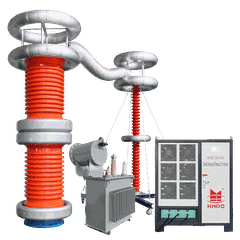


AC Hipot Test Set: Working Principle, Applications, Test Procedures and Selection Guide
1. What Is an AC Hipot Test Set?
An AC Hipot Test Set is an electrical testing device used to evaluate the dielectric strength of insulation by applying a specified alternating voltage between electrically separated parts of a test object.
The term "hipot" comes from "high potential." The test is also commonly called an AC dielectric withstand test or AC voltage withstand test.
During testing, the equipment applies a controlled AC voltage to the insulation under examination. The test system monitors the voltage and current to identify excessive leakage, electrical breakdown or flashover.
AC hipot testing is commonly used in:
Power transformer manufacturing
Switchgear and circuit breaker production
High-voltage cable accessories
Electrical insulation component testing
Motors and generators
Electrical equipment manufacturing laboratories
Power utility maintenance and inspection
The purpose is to verify insulation performance under the test conditions specified by the applicable product standard or project specification.
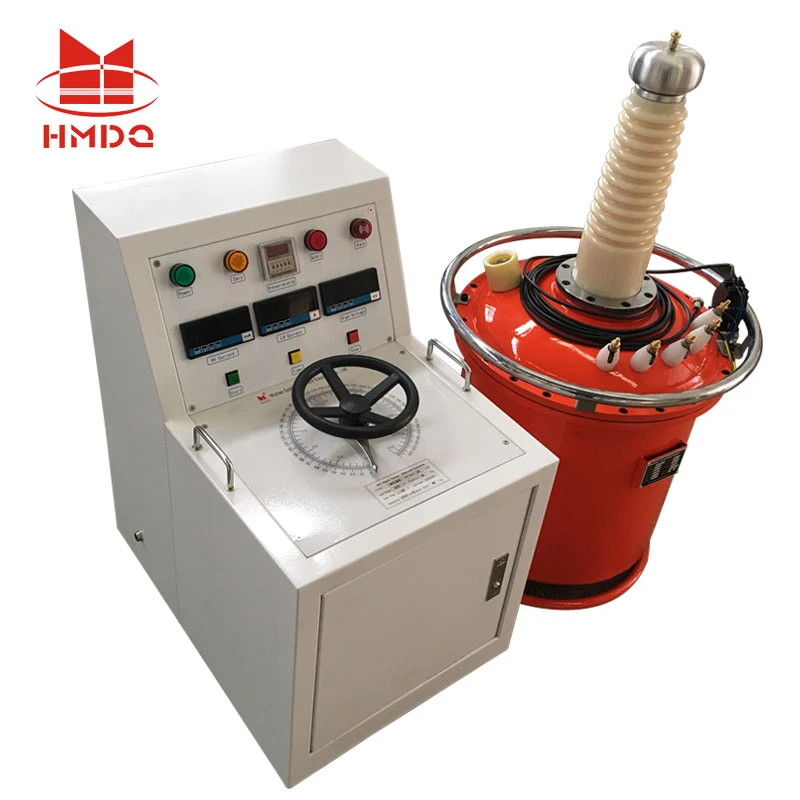
2. How Does an AC Hipot Test Set Work?
An AC hipot test set generates a high AC voltage through a step-up transformer or another suitable high-voltage power conversion arrangement.
A typical power-frequency AC hipot system follows this process:
The input power enters the control unit.
The voltage regulator adjusts the excitation voltage.
The high-voltage test transformer increases the voltage to the required level.
The output voltage is applied to the test object.
The measurement circuit monitors voltage and leakage current.
The protection circuit responds to overcurrent, breakdown or other abnormal conditions.
The Principle of Dielectric Withstand Testing
Insulating materials separate conductive parts that must remain electrically isolated.
During an AC withstand test, a specified voltage is applied across the insulation. The test stresses the insulation to identify defects or weaknesses that may cause electrical failure.
The result is normally evaluated according to the specified test voltage, duration, leakage-current limit and breakdown criteria.
A simplified relationship for the measured current is:
[
I=I_C+I_R
]
Where:
(I) = total measured current
(I_C) = capacitive current
(I_R) = resistive current associated with insulation losses and leakage
For an ideal capacitive load:
[
I_C=2\pi fCU
]
Where:
(f) = test frequency
(C) = capacitance of the test object
(U) = applied RMS voltage
This relationship explains why the same AC hipot tester can show different output currents when connected to different test objects.
A large capacitive load may require more output current even when the applied test voltage remains unchanged.
3. Main Components of an AC Hipot Test Set
The exact configuration depends on the voltage rating, output capacity and intended application. A typical high-voltage AC hipot system includes the following components.
3.1 Voltage Regulator
The voltage regulator controls the excitation voltage supplied to the high-voltage transformer.
Its main functions may include:
Smooth voltage adjustment
Output voltage control
Input voltage monitoring
Overcurrent protection
Controlled voltage increase and decrease
Depending on the system design, voltage regulation may be manual or automatic.
3.2 AC High-Voltage Test Transformer
The test transformer increases the input voltage to the required high-voltage AC level.
It is one of the main components of the test system.
Different transformer designs are available, including:
Oil-immersed high-voltage test transformers
Dry-type high-voltage test transformers
Compact portable test transformers
Modular or cascade transformer arrangements
The transformer should be selected according to rated output voltage, output current, capacity, frequency and insulation requirements.
3.3 High-Voltage Measurement System
The measurement system monitors the voltage applied to the test object.
A high-voltage divider may be used to reduce the output voltage to a measurable signal.
The measuring system should have appropriate voltage and frequency ratings, calibration and accuracy for the intended test.
3.4 Leakage Current Measurement
The leakage-current measuring circuit monitors the current flowing through the test object during the withstand test.
The measured current can include both capacitive and resistive components.
For capacitive test objects, the capacitive component may be significant. Therefore, the acceptable current limit must be established using the relevant test specification rather than a universal value.
3.5 Control Console
The control console allows operators to manage the test process.
Depending on the configuration, it may provide:
Voltage adjustment
Output voltage display
Current display
Test duration setting
Start and stop control
Overvoltage protection
Overcurrent protection
Emergency shutdown
Test status indication
3.6 Protection and Grounding System
A high-voltage AC test system requires appropriate protective measures.
Typical provisions include:
Electrical interlocks
Emergency stop
Overcurrent and overvoltage protection
Grounding connections
Discharge equipment
Safety barriers and warning indicators
The actual protection design must match the test voltage, equipment configuration and applicable safety procedures.
4. Different Types of AC Hipot Test Sets
AC hipot equipment is available in several configurations. The correct type depends on the test object and the required test conditions.
Power-Frequency AC Hipot Test Set
This type generates an AC voltage at the specified power frequency, commonly 50 Hz or 60 Hz.
It is suitable for many general dielectric withstand tests on electrical equipment and insulation components.
Typical applications include transformers, switchgear, electrical accessories and insulation materials.
Dry-Type AC Hipot Test Set
Dry-type systems use a dry-insulated high-voltage transformer instead of an oil-filled transformer.
Potential advantages include:
No transformer insulating oil
Convenient transportation
Compact equipment arrangement
Suitable for selected laboratory and field applications
The actual voltage and capacity depend on the specific design.
Oil-Immersed AC Hipot Test Set
Oil-immersed high-voltage test transformers use insulating oil for internal insulation and heat dissipation.
They are commonly considered for high-voltage testing applications where the required electrical capacity and insulation design are suitable.
Integrated AC Hipot Test System
An integrated system combines the control console, test transformer, measurement equipment and accessories into a coordinated testing arrangement.
Depending on the project, the system may be configured for laboratory testing, manufacturing inspection or on-site testing.
5. Applications of AC Hipot Test Sets
5.1 Transformer Dielectric Testing
AC hipot systems can be used for specified dielectric withstand tests on power transformers and distribution transformers.
Typical applications include:
Applied voltage withstand testing
Insulation system verification
Transformer manufacturing quality control
Selected insulation component testing
It is important to distinguish separate-source AC withstand testing from induced voltage testing. These are different transformer test methods and require different test arrangements.
5.2 Switchgear and Circuit Breaker Testing
Switchgear insulation must withstand the specified electrical stress between live parts and grounded enclosures, as well as between phases where applicable.
An AC hipot test set can be used for specified power-frequency withstand tests during manufacturing, installation or commissioning.
The test connection and voltage requirements depend on the switchgear design and applicable product standard.
5.3 Cable Accessories and Insulation Components
AC dielectric withstand testing is used for selected cable accessories, bushings, insulators and other electrical insulation components.
The equipment must provide sufficient voltage and current for the connected load.
For long power cables with high capacitance, a conventional AC test transformer may not be the most suitable solution. A series resonant test system may be more appropriate.
5.4 Motors and Generators
AC hipot testing can verify insulation between windings and ground or between electrically separated circuits, where required by the relevant test procedure.
The test voltage and duration must be determined according to the machine type, winding design, insulation condition and applicable standard.
5.5 Electrical Manufacturing and Quality Control
Manufacturers may use AC hipot equipment as part of production inspection and electrical safety testing.
Typical test objects include:
Electrical control panels
Insulating components
Transformers
Switchgear assemblies
Electrical connectors
Industrial electrical equipment
A production test procedure should define the connection method, voltage ramp, test duration, leakage-current threshold and pass/fail criteria.
6. AC Hipot Test Procedure
A controlled AC withstand test generally includes the following stages.
Step 1: Check the Test Object
Confirm the test object identification, rated voltage, insulation arrangement and applicable test requirements.
Inspect the equipment for visible damage and confirm that the test object is suitable for the planned procedure.
Step 2: Prepare the Test Area
Establish the safety zone and verify that unauthorized personnel cannot enter the high-voltage test area.
Check grounding, interlocks, emergency stop and discharge arrangements.
Step 3: Connect the Test Equipment
Connect the high-voltage output, return circuit and measurement connections according to the approved test diagram.
Verify that the test object is correctly isolated from other circuits.
Step 4: Set the Test Parameters
Set the required test voltage, frequency and duration according to the applicable standard or project specification.
Set the current protection threshold where the system supports this function.
Step 5: Apply the AC Test Voltage
Increase the output voltage gradually to the specified level.
Monitor the output voltage, current and equipment status throughout the voltage increase.
Step 6: Maintain the Test Voltage
Maintain the specified voltage for the required duration.
Observe whether the measured current remains within the defined acceptance criteria and whether any breakdown or flashover occurs.
Step 7: Reduce Voltage and Discharge
Reduce the output voltage to zero, switch off the equipment and discharge the test object using the approved procedure.
After discharging, apply grounding as required before approaching or disconnecting the test object.
Step 8: Record the Test Results
Record the following information:
Test object name and identification
Applied AC voltage
Test frequency
Test duration
Measured leakage current
Protection or breakdown events
Test result
Test equipment identification and calibration information
Important: High-voltage AC testing must be performed by qualified personnel under an approved safety procedure. The test object must be discharged and grounded before handling.
7. AC Hipot Test Set vs. AC Resonant Test System
Both systems are used for AC dielectric withstand testing, but their configurations and load capabilities differ.
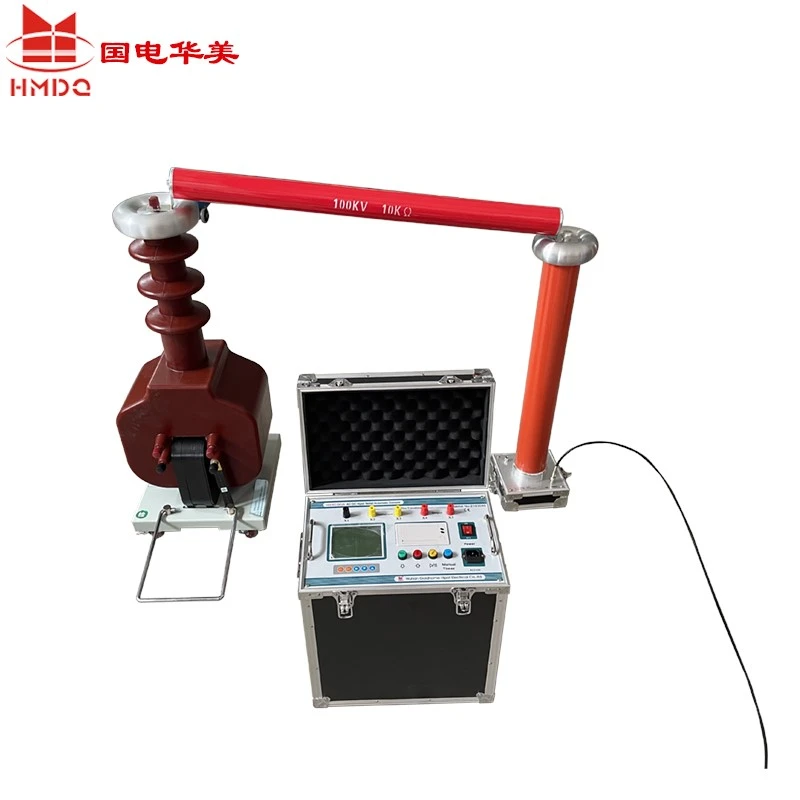
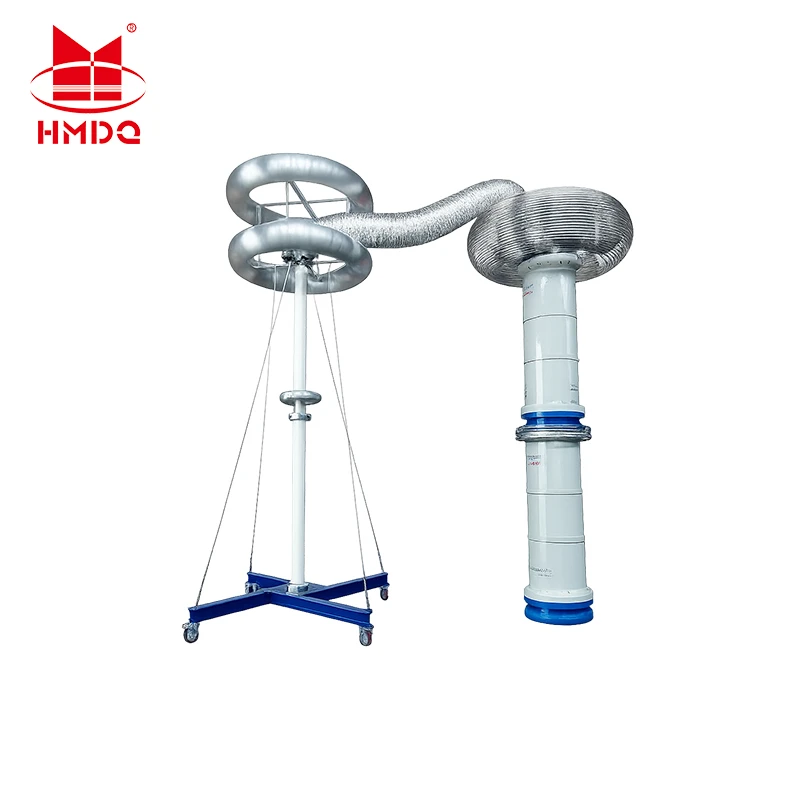
| Comparison | AC Hipot Test Set | AC Resonant Test System |
|---|---|---|
| Main principle | Step-up transformer supplies AC test voltage | LC circuit uses electrical resonance |
| Main configuration | Regulator and HV test transformer | Variable-frequency source, excitation transformer and reactor |
| Load characteristics | Suitable for low-to-moderate capacitive loads, depending on capacity | Particularly suitable for large capacitive loads |
| External reactive power | Supplied by the test source | Mainly compensated within the resonant circuit |
| Typical applications | Insulators, components, switchgear and selected transformer tests | Long cables, GIS and other large capacitive loads |
| System complexity | Generally simpler | More complex reactor and control configuration |
The choice should be based on the capacitance of the test object, required voltage, output current, test frequency and available power supply.
8. How to Select an AC Hipot Test Set
Before purchasing an AC hipot test set, engineers should evaluate the following technical requirements.
Rated Output Voltage
The maximum output voltage must meet the specified test requirement.
Confirm whether the rating is expressed as RMS voltage or peak voltage. AC withstand test ratings are commonly specified in RMS values, but the manufacturer's documentation should state the definition clearly.
Output Current and Capacity
Output current determines the load that the system can support at the specified test voltage.
The apparent power can be estimated using:
S=U/I
Where:
(S) = apparent power in VA
(U) = AC output voltage in RMS
(I) = output current in RMS
For example, a system rated at 100 kV RMS and 100 mA has a nominal apparent power of:

Therefore, its nominal output capacity is 10 kVA.
This calculation is useful for preliminary selection. The actual equipment rating and permissible duty cycle must be checked in the technical specification.
Test Frequency
Confirm whether the equipment operates at 50 Hz, 60 Hz or another specified frequency.
Frequency affects the capacitive current of the test object.
Test Object Capacitance
For capacitive loads, the required current increases with capacitance, frequency and applied voltage.
The relationship is:
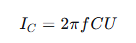
Engineers should estimate or measure the load capacitance before choosing the output current rating.
Voltage Regulation and Measurement Accuracy
Check the voltage regulation performance, measurement range, display resolution and calibration documentation.
The measuring system should be suitable for the specified test conditions.
Protection Functions
Check whether the equipment provides overcurrent protection, overvoltage protection, breakdown detection, emergency shutdown and other required functions.
Portability and Installation
For on-site applications, consider equipment dimensions, total weight, power supply, transportation, installation conditions and grounding arrangements.
9. Applicable Standards
The applicable standard depends on the type of test object and the purpose of the test.
| Standard | Scope or Relevance |
|---|---|
| IEC 60060-1:2025 | General terminology and test requirements for high-voltage dielectric testing |
| IEC 60060-2 | High-voltage measuring systems |
| IEC 60060-3 | Definitions and requirements for on-site high-voltage testing |
| IEC 60076 Series | Power transformer requirements and testing |
| IEC 62271 Series | High-voltage switchgear and controlgear |
| IEC 60502 Series | Power cables with extruded insulation and their accessories |
These standards do not establish one universal hipot voltage for all equipment. The actual test voltage, frequency, duration and acceptance criteria depend on the relevant product standard, equipment rating and project specification.
10. Frequently Asked Questions
What does an AC hipot test set do?
It applies a specified AC high voltage across electrical insulation to verify dielectric withstand performance and identify insulation breakdown or excessive leakage.
What is the difference between an AC hipot test and an insulation resistance test?
An AC hipot test evaluates insulation under a specified high AC voltage. An insulation resistance test measures resistance using a DC test voltage. They assess different electrical characteristics and are not interchangeable.
What is the difference between AC and DC hipot testing?
AC hipot testing applies alternating voltage, while DC hipot testing applies direct voltage. Their voltage stress and current characteristics differ, so the test method must follow the applicable standard and equipment requirements.
Can an AC hipot test set be used for transformer testing?
Yes. It can be used for specified transformer dielectric withstand tests, such as separate-source AC withstand testing, when the voltage and capacity are suitable. Induced voltage testing requires a different test arrangement.
How much output capacity does an AC hipot test set need?
The required capacity depends on the test voltage, output current, frequency and test object capacitance. The system should be sized for the actual load rather than selected by voltage rating alone.
Can a conventional AC hipot test set test long high-voltage cables?
It depends on the cable capacitance and the output capacity of the equipment. Long cables can require substantial capacitive current. A series resonant test system is often a more suitable solution for large capacitive loads.
11. Goldhome AC High-Voltage Testing Solutions
Wuhan Goldhome Hipot Electrical Co., Ltd. focuses on high-voltage electrical testing equipment and integrated testing solutions for power utilities, transformer manufacturers, electrical equipment factories and testing laboratories.
Goldhome's AC high-voltage testing solutions can be configured according to different voltage levels, output capacity and application requirements.
A typical project configuration may include:
AC voltage regulator
High-voltage test transformer
High-voltage divider
Control console
Leakage-current measurement
Protection and grounding accessories
For applications involving large capacitive loads, Goldhome can also provide AC series resonant testing solutions as a separate equipment configuration.
The final system should be selected according to the test object, rated voltage, capacitance, required test current and applicable testing standard.
Visit the official website for more information:
https://www.goldhomehipot.com
WhatsApp:+8618971538425
Conclusion
An AC Hipot Test Set is an important instrument for evaluating the dielectric withstand performance of electrical insulation.
Its selection involves more than choosing a maximum output voltage. Engineers must also consider output current, capacity, test frequency, load capacitance, measurement accuracy, protection functions and the applicable test procedure.
By matching the equipment configuration to the actual test object, manufacturers and testing laboratories can establish a more reliable and repeatable AC dielectric testing process.


