

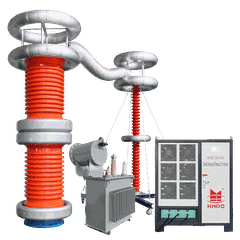


Primary Current Injector: 3,000 A, 5,000 A and 6,000 A Options for Electrical Testing
1. Three Current Output Options for Different Testing Requirements
Primary current injection testing is used to verify the performance of electrical equipment by applying a high current directly to its primary circuit.
The required output current depends on the equipment under test, rated current, protection settings, test procedure and connection impedance.
To accommodate different testing requirements, the Primary Current Injector is available in three output options:
| Configuration | Maximum Current Option | Typical Selection Direction |
|---|---|---|
| Option 1 | 3,000 A | General high-current testing and maintenance |
| Option 2 | 5,000 A | Higher-current switchgear and protection testing |
| Option 3 | 6,000 A | Applications requiring a higher primary injection current |
These options provide different current capacity levels for electrical testing projects.
The maximum current rating alone does not determine the complete system performance. Output voltage, load impedance, duty cycle, power supply and current lead configuration must also be considered.
2. What Is a Primary Current Injector?
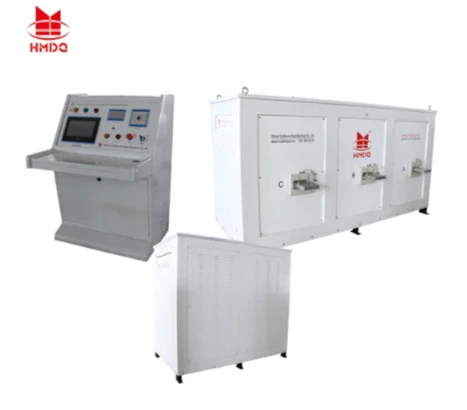
A Primary Current Injector, also called a Primary Current Injection Test Set, is high-current testing equipment that injects AC current directly into the primary circuit of an electrical device.
Unlike secondary injection testing, which applies a simulated signal to the secondary side of a protection system, primary injection testing allows the primary current path and associated protection components to be evaluated under actual current injection conditions.
Depending on the test arrangement, the system can be used to verify:
Circuit breaker overcurrent protection
Current transformer (CT) ratio and polarity
Protective relay operation through the primary circuit
Switchgear current paths
Busbar and connection performance
High-current electrical connections
Temperature-rise characteristics, when the equipment is configured for the required test duration and loading
A typical primary current injection system includes a current generation unit, control unit, measurement system, output cables and protection functions. The actual configuration varies by equipment design.
3. Compare the Three Primary Current Injector Options
Option 1: 3,000 A Primary Current Injector
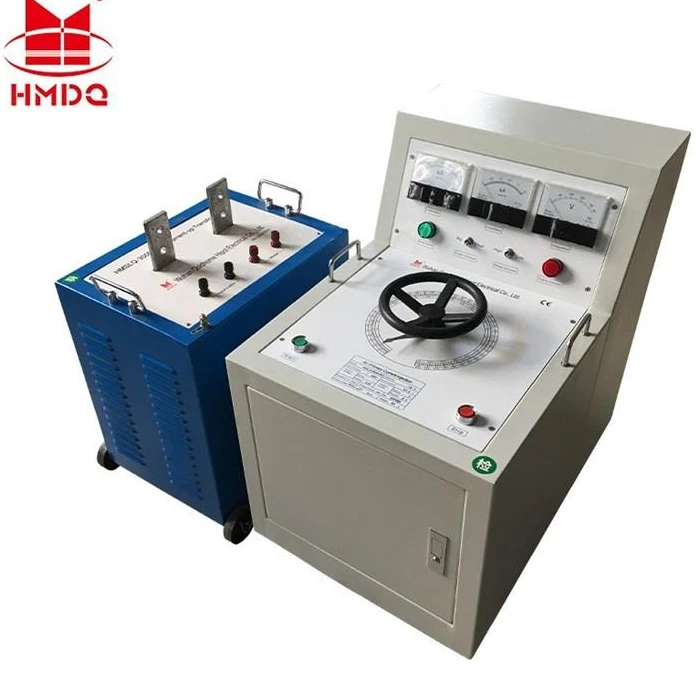
The 3,000 A configuration is intended for projects where the required primary injection current is within this output range.
Potential applications include:
Low-voltage circuit breaker testing
Current transformer primary injection
Switchgear commissioning and maintenance
Protection circuit verification
Electrical connection and contact testing
This option may be suitable for general maintenance teams and electrical testing laboratories that do not require the higher current capacity of the 5,000 A or 6,000 A configurations.
Before selection, confirm the required test current and the output voltage available at the corresponding load.
Option 2: 5,000 A Primary Current Injector
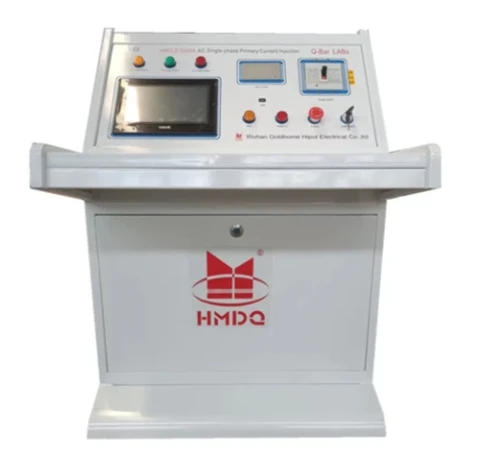
The 5,000 A configuration provides a higher maximum current option for applications with greater primary injection requirements.
Potential applications include:
Higher-current circuit breaker testing
Switchgear primary circuit verification
CT testing under specified primary current conditions
Protection system commissioning
High-current connection and conductor testing
This configuration may be considered when the required test current exceeds the practical range of a 3,000 A system.
The actual output current depends on the connected load impedance, output cable resistance and the available output voltage.
Option 3: 6,000 A Primary Current Injector
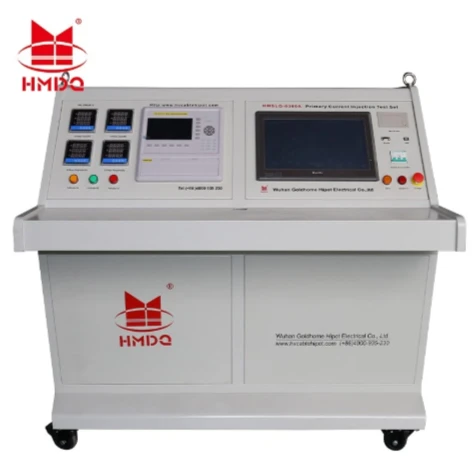
The 6,000 A configuration is intended for applications that require a higher maximum primary injection current.
Potential applications include:
High-current switchgear testing
Circuit breaker testing under higher current conditions
Primary current testing of large electrical assemblies
High-current connection verification
Specialized electrical testing projects
This option provides the highest nominal current capacity among the three configurations.
It should be selected when the test specification requires current levels beyond the practical capability of the lower-current options.
A 6,000 A maximum rating does not automatically mean that the system can deliver 6,000 A continuously. The rated output duration, load voltage and duty cycle must be verified from the technical datasheet.
4. Typical Applications of Primary Current Injection Testing
4.1 Circuit Breaker Testing
Primary injection testing can be used to verify the operation of circuit breaker overcurrent protection.
The test current is injected through the primary current path, and the breaker operating time is recorded.
Depending on the breaker and protection design, testing may include:
Long-time overcurrent operation
Short-time overcurrent operation
Instantaneous trip operation
The injection current and test duration should follow the circuit breaker's manufacturer's specifications and approved test procedure.
4.2 Current Transformer Testing
A primary current injector can apply current through the CT primary circuit while the secondary current is measured.
This arrangement can support:
CT ratio verification
Polarity checks
Secondary current measurement
Primary circuit inspection
The test setup must use suitable secondary measurement equipment and follow the CT manufacturer's requirements.
4.3 Switchgear and Busbar Testing
Primary current injection can be used during switchgear commissioning and maintenance to verify current paths and associated protection operation.
For busbar and connection testing, the required current and duration depend on the applicable test specification.
4.4 Temperature-Rise Testing
High-current injection can also be used in temperature-rise testing of electrical assemblies.
This application is different from a short-duration circuit breaker trip test. It may require a stable current output over a much longer period.
Therefore, a system selected for temperature-rise testing must be evaluated according to its continuous current rating, thermal capacity, cooling arrangement and specified duty cycle.
5. How to Select Between 3,000 A, 5,000 A and 6,000 A
The correct option should be based on the actual test requirements rather than simply choosing the highest current rating.
| Selection Factor | 3,000 A | 5,000 A | 6,000 A |
|---|---|---|---|
| Maximum current category | 3 kA | 5 kA | 6 kA |
| Relative current capacity | Standard | Higher | Highest |
| Typical project direction | General current injection | Higher-current testing | Specialized high-current testing |
| Important verification | Required current and load | Output capacity and duty | Load voltage and thermal capability |
Step 1: Identify the Required Test Current
Check the rated current and test current requirements of the circuit breaker, CT, switchgear or other equipment.
The selected injector must be able to reach the required current under the actual test load.
Step 2: Check Output Voltage and Load Impedance
A primary current injector is a high-current, generally low-voltage source.
The available output current is influenced by the total impedance of:
The equipment under test
Output cables
Connection points
Contact resistance
The injection circuit
A higher nominal current rating does not guarantee that the maximum current will be available under every load condition.
Step 3: Confirm Current Injection Duration
Different tests require different current durations.
For example, a short-duration trip test and a long-duration temperature-rise test have different thermal requirements.
Confirm the current-time rating for the selected output level.
Step 4: Consider Output Cable Requirements
High-current output cables must be selected according to current capacity, length, cross-sectional area, temperature rise and connection method.
Longer or undersized cables can increase circuit impedance and reduce the available injection current.
Step 5: Evaluate Future Testing Requirements
If the testing scope may expand, a higher-current configuration may provide additional capacity.
However, the purchase decision should also consider equipment size, power supply, transportation, operating conditions and project budget.
6. Technical Specifications to Confirm Before Ordering
The three current options identify the nominal maximum output current categories. The following information should be confirmed in the manufacturer's technical datasheet before final equipment selection.
| Technical Parameter | Required Confirmation |
|---|---|
| Output current | 3,000 A / 5,000 A / 6,000 A |
| Output voltage | Rated output voltage at each current range |
| Output capacity | Rated kVA or other applicable capacity |
| Output frequency | 50 Hz, 60 Hz or other specified frequency |
| Current adjustment | Manual or automatic regulation |
| Current measurement | Measurement range, accuracy and resolution |
| Timing function | Timer range and accuracy, if included |
| Output duration | Continuous and short-time current ratings |
| Duty cycle | Permitted operating and cooling intervals |
| Power supply | Input voltage, phase and frequency |
| Output cables | Length, cross-sectional area and quantity |
| Protection | Overcurrent, thermal and short-circuit protection |
| Structure | Integrated or separate control and current units |
7. Primary Injection Testing vs. Secondary Injection Testing
These two methods serve different testing purposes.
| Comparison | Primary Injection | Secondary Injection |
|---|---|---|
| Injection point | Primary current circuit | Secondary protection circuit |
| Test signal | High current | Simulated or controlled secondary signal |
| Main objective | Evaluate the primary current path and associated protection response | Verify relay and protection functions |
| Typical applications | CT, circuit breaker and switchgear testing | Protective relay and control circuit testing |
| Equipment requirement | High-current injection system | Secondary injection test equipment |
Primary injection provides a more comprehensive test of the primary current path and the associated protection chain, while secondary injection is useful for checking relay logic and protection settings.
Neither method automatically replaces the other. The test plan should reflect the commissioning or maintenance requirements.
8. Safety Considerations
Primary current injection involves high electrical current and can produce significant heat at connection points and within output conductors.
Before testing:
Isolate the equipment under test from the live power system.
Verify that the circuit is de-energized.
Apply grounding and safety procedures as required.
Check the current injection leads and connections.
Confirm that the output circuit is correctly assembled.
Keep personnel away from exposed high-current connections during operation.
Monitor the output current and test duration.
Stop the test if abnormal heating, loose connections or unexpected operation occurs.
Primary current injection equipment must only be connected to a properly isolated test circuit. Follow the equipment manufacturer's operating manual and the site's electrical safety procedures.
9. Goldhome Primary Current Injection Solutions
Wuhan Goldhome Hipot Electrical Co., Ltd. provides high-voltage and high-current electrical testing equipment for power utilities, electrical manufacturers, testing laboratories and engineering contractors.
For primary current injection applications, three output current options are available for project selection:
3,000 A Primary Current Injector
5,000 A Primary Current Injector
6,000 A Primary Current Injector
The appropriate configuration depends on the required test current, load impedance, output duration, power supply and application.
Goldhome can support project-specific equipment configuration based on the customer's testing requirements.
For product information and technical consultation, visit:
Goldhome Hipot: https://www.goldhomehipot.com
10. Frequently Asked Questions
Q1. What is a primary current injector used for?
It injects high current into the primary circuit of electrical equipment for testing circuit breakers, current transformers, switchgear, protection systems and other high-current components.
Q2. What is the difference between the 3,000 A, 5,000 A and 6,000 A options?
The main stated difference is the maximum current category. The 5,000 A and 6,000 A configurations provide higher nominal current capacity than the 3,000 A option. Other performance parameters must be confirmed from the equipment specifications.
Q3. Can a 3,000 A injector test a 5,000 A circuit breaker?
It depends on the required test current and the test procedure. If the test requires more than 3,000 A, the 3,000 A configuration may not be suitable.
Q4. Can a 6,000 A primary current injector operate continuously?
The maximum current rating alone does not establish continuous operation capability. Confirm the rated current duration, duty cycle, cooling method and thermal limits.
Q5. Can primary current injection equipment test CTs?
Yes. It can inject current into the CT primary circuit while suitable secondary measurement equipment records the resulting current. The test arrangement depends on the CT rating and test objective.
Q6. Is primary current injection suitable for temperature-rise testing?
It can be used for temperature-rise testing when the system is designed for the required current, duration and thermal loading. A short-time current rating should not be treated as a continuous rating.
Q7. Which option should I choose?
Choose 3,000 A for applications within that current range, 5,000 A for higher-current requirements, and 6,000 A when the test specification requires the highest current among these three options. Always verify the actual load and current-time requirements before ordering.
Conclusion
The 3,000 A, 5,000 A and 6,000 A Primary Current Injector options provide three current capacity choices for electrical testing applications.
The correct configuration should be selected according to the equipment under test, required injection current, output voltage, load impedance and operating duration.
A properly configured primary current injection system supports reliable testing of circuit breakers, CTs, switchgear and other electrical equipment.


