



The Leak Pointer Says ppm. The Standard Says Percent per Year.
A handheld SF6 leak pointer is an excellent instrument for the job it was designed to do, and the wrong instrument for the question that ends up on the maintenance report. The gap between those two things is where most SF6 leak management goes wrong.
A technician works a flexible probe along the underside of a GIS flange. The reading climbs to 40 µL/L, holds there for a second, then falls back to zero two centimetres further out. He moves the tip back and finds it again. The leak is located in under two minutes, at a specific gasket on a specific joint, and the pointer behaved exactly as designed.
Then the maintenance report asks for something else entirely: the annual leakage rate of that gas compartment.
The pointer, which just performed flawlessly, cannot answer. Not because it is a poor instrument, but because the two questions are in different units, and there is no conversion that runs directly between them.
Two units, and then a third
The number on the display is a volume-fraction concentration - microlitres of SF6 per litre of air, which is the same as parts per million. It is a local quantity. It is set by the shape of the leak plume, by how far the probe tip sits from the orifice, by the tip's travel speed, by draughts in the room. Two technicians with two identical instruments can legitimately report 40 µL/L and 8 µL/L on the same leak, and neither is wrong.
That is precisely what makes the reading useful for locating. A leak makes a plume; the plume is steep; a steep gradient is a direction. You sweep, watch the number climb, and close in. The instrument is a gradient finder.
It is also why the number cannot be compared to a standard. The leakage limits written into the switchgear standards are not concentrations. IEC 62271-1 §5.15.2 specifies the tightness of a closed pressure system by its relative leakage rate per compartment, with standardised values for SF6 and SF6 mixtures of 0.5 % and 1 % per year and a time between replenishment of at least ten years. For a sealed pressure system - the "sealed for life" medium-voltage equipment - tightness is specified by expected operating life, with 20, 30 and 40 years as the preferred values and 0.1 % per year taken as the leak rate that satisfies them. IEC 62271-203 puts 0.5 % per year as the maximum acceptable rate for high-voltage switchgear. Chinese practice, under DL/T 595-2025, sets 0.5 % per year for new equipment and 1 % per year for equipment in service, with survey intervals of three years at 110 kV and below, two years from 220 kV to 500 kV, and annually at 1000 kV.
Every one of those verdicts is written as a percentage per year of the gas the compartment holds. Not one of them is written in µL/L.
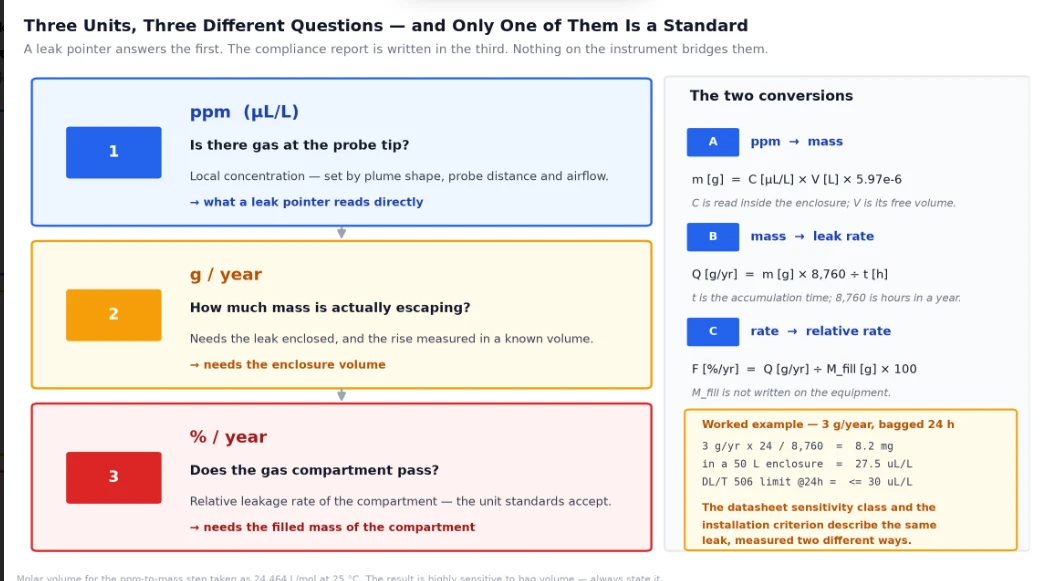
Figure 1 - The pointer reads the top level. The standard judges the bottom level. Two conversions sit between them, and each one needs a number the instrument does not have.
There is a fourth unit in circulation as well, and it is worth recognising so it does not get mixed in. The routine tightness test required by IEC 62271-1 calls for a sniffer whose sensitivity is at least 10⁻⁸ Pa·m³/s - a mass-flow unit tied to a specified test configuration, used at the factory on a freshly assembled unit. It is a legitimate acceptance unit for a manufacturer's routine test. It is not something a technician can calculate in an operating substation, and it cannot be read off a ppm display.
Where the gas actually goes
One physical fact explains most of the field technique. SF6 has a relative molecular mass of about 146; air is about 29. The gas is roughly five times denser than air, and it does not behave like a light gas at all.
A leak does not rise. It falls. It spills down the side of the enclosure, through floor penetrations, into cable trenches and basements, and it sits there - because there is nothing to carry it away. In an indoor GIS hall with the ventilation off, the gas layers: nearly clean at ceiling level, progressively richer as you go down.
Three practical consequences follow, and all three are routinely missed:
Sweep low, then work up. The instinct is to run the probe around the joint at the height of the joint. But a plume from a flange gasket has already left that plane. Start below the joint and at floor level, hold the tip still for a few seconds, and only then work upward. The manufacturer's own operating notes for the handheld units in this class make the same point from the other direction - if a leak cannot be found, increase sensitivity, and if the instrument will not reset cleanly, decrease it.
The trench is often the first detector. Gas from a seal failure migrates down through shafts and floor penetrations, and the earliest detectable reading is frequently at low level in a basement, far from the bay that is actually leaking. A survey that only walks the bay fronts will miss it.
Oxygen is the second alarm. Where SF6 pools, air is displaced. This is why instruments in this category often carry both sensors. The occupational figure is 1000 µL/L for a full-time work schedule - a limit established for all non-toxic gases not normally present in the atmosphere rather than a toxicity threshold. IEC 60480 notes that a mixture of 20 % oxygen and 80 % SF6 can be inhaled without adverse effect; above roughly 20 % SF6 the hazard is asphyxiation from oxygen displacement, not poisoning. This is a safety limit and it is a different number from every leak-rate criterion above. A pointer set to alarm at 1000 µL/L is doing a personnel-protection job, not a leak-rate job, and the two should not be allowed to blur.
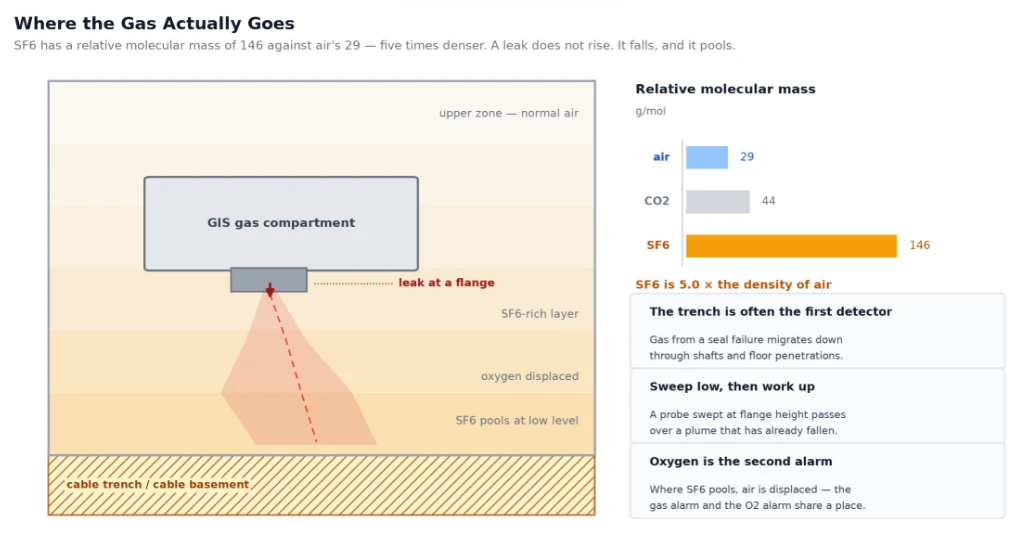
Figure 2 - Density stratification. The plume falls, the trench collects, and the oxygen-deficient layer forms where the gas collects. Ventilation must be off during the survey, or the layering that makes the technique work never establishes.
Two operating conditions matter more than any instrument specification. Wind destroys the plume - in a windy area even a substantial leak is difficult to locate, and the practical answer is to shield the candidate area rather than to keep sweeping. And ventilation must be off. In a mechanically ventilated room the concentration at the probe tip becomes a function of the air-change rate rather than of the leak, and the survey silently stops measuring the thing it was meant to measure.
Two methods, and only one of them produces a number you can file
Sniffing
The probe sweep. Sweep the joints, find the gradient, close in on the orifice. This is the only method that locates a leak, and it is the correct method after a repair - you want to know the joint is silent, and a silent joint takes thirty seconds to confirm.
Sniffing is at best semi-quantitative. The reading is a concentration in a plume whose geometry is unknown, which is the reason the same leak can read two different numbers on two different days.
Bagging
The quantitative method. Wrap the joint in an enclosure of known free volume, leave it to dwell, then measure the concentration that has built up inside. Now the enclosure volume is known, the dwell time is known, and the rise is a mass - which converts to a mass flow rate, which converts to a percentage of the compartment's fill.
This is the method written into the installation standards. DL/T 506-2018 requires every flange sealing face, weld, gas-filling port and operating-mechanism seal to be checked by the bagging method before evacuation and filling, with the acceptance criterion that after 24 hours the SF6 concentration inside the enclosure does not exceed 30 µL/L.
Run the arithmetic on that criterion and something interesting appears. A 3 g/year leak, accumulated for 24 hours, is 8.2 mg of SF6. Contained in a 50-litre enclosure, that reads 27.5 µL/L - just under the 30 µL/L limit. For the criterion to correspond exactly to 3 g/year, the enclosure has to be about 46 litres.
Note what that means. The 3 g/year sensitivity class printed on a halogen leak detector's datasheet and the 30 µL/L acceptance figure written into the installation standard describe the same physical leak, expressed in two different ways. The instrument on the shelf and the test in the standard were sized around the same threshold - which is a useful thing to know when someone asks why a 3 g/year instrument is good enough.
It also carries a warning. That correspondence only holds at that enclosure volume. Wrap the same 3 g/year leak in a 200-litre enclosure and it reads 6.9 µL/L; wrap it in a 20-litre enclosure and it reads 69 µL/L and fails. A bagging criterion quoted without the enclosure volume is not a criterion - it is just a number. Whatever the local procedure says, write the bag volume into the record.
And then the conversion nobody completes
The final step from g/year to %/year needs the mass of gas the compartment holds. That single division is where the two most different verdicts in SF6 leak management come from:
|
Compartment |
Fill mass |
Leak |
Relative rate |
Verdict |
|
Medium-voltage ring main unit |
3 kg |
3 g/yr |
0.10 %/yr |
At the sealed-system reference rate |
|
High-voltage GIS bay |
30 kg |
3 g/yr |
0.01 %/yr |
An order of magnitude better than the reference rate |
The same absolute leak. Two compartments. Two verdicts that differ by a factor of ten. An absolute leak rate in grams per year is not a judgement - it is an input, and the number that turns it into a judgement is the one that is almost never written into the maintenance file.
This matters more every year. SF6 carries a global warming potential of 24,300 on the IPCC AR6 basis (23,500 under AR5) and an atmospheric lifetime of roughly 3,200 years, so a 3-gram-per-year leak is not a trivial accounting line. Under EU Regulation 2024/573, leak-check intervals are set by the CO₂-equivalent charge: twelve months below 50 t CO₂e - which is just 2 kg of SF6 - six months from 50 to 500 t, and three months above 500 t, with those intervals doubling where a fixed leakage detection system is installed. From 2035, only reclaimed or recycled SF6 may be used for servicing electrical switchgear. Reporting a concentration in place of a rate stops being a housekeeping problem and becomes a compliance one.
The instrument
The point-detector category splits into two detector principles, and the split is worth understanding before choosing.
Negative corona / electron capture exploits SF6's strong electronegativity. A continuous corona discharge in the sensor produces a standing current; SF6 molecules entering the detector capture free electrons, become slow negative ions, and the standing current falls. Sensitivity is high and response is fast - which is exactly what a locating instrument needs. The trade-off is that the sensor responds to the change, so dust, oil mist, corrosive gases and halogen-bearing solvents drive the baseline in the same direction a leak does. A drifting baseline and a real leak look alike.
Non-dispersive infrared at 10.6 µm measures absorption by the SF6 molecule directly. It gives a stable absolute reading, is not disturbed by moisture or CO₂, and produces a number that can go into a record. It is slower and more expensive, and it is the better choice when the job is measuring rather than finding.
Goldhome builds across both ends of this range. The HM3020S handheld is the locating instrument: minimum detectable concentration 1 × 10⁻⁶ by volume, detection range 1–1000 × 10⁻⁶, response under one second and recovery under ten, indication error within ±3 % and repeatability within 1 %, a flexible probe extendable to one metre, LCD display with multi-frequency audible alarm, and a maximum sensitivity of 3 g/year with the sensor stationary. It runs five hours on a rechargeable NiMH pack, works on AC or DC, and weighs 2 kg. Product page: HM3020S handheld SF6 gas leak detector.
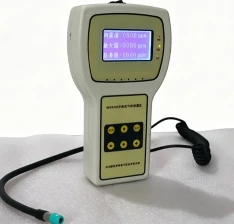
Figure 3 - The handheld pointer. The display carries three figures - instantaneous, maximum and net - which is a direct response to how the instrument is used: sweep, hold the peak, and read the net value against a zero taken in clean air.
Alongside it, the HM3020X is the halogen-detector variant - seven sensitivity levels spanning a 64× range, tri-colour LED indication, a 35.5 cm stainless probe, two AA cells for roughly 30 hours, 560 g, and SAE J1627 certification covering R12, R22 and R134a. The HM3020J sits at the other end: a quantitative bench-grade unit with 1 × 10⁻⁸ sensitivity, a 1 L/s vacuum pump and a four-metre hose, for measuring on recovered or sampled gas rather than for walking a bay. Links: SF6 leak tester (HM3020J) · SF6 quantitative leak analyzer · SF6 leak detector for GIS switchgear.
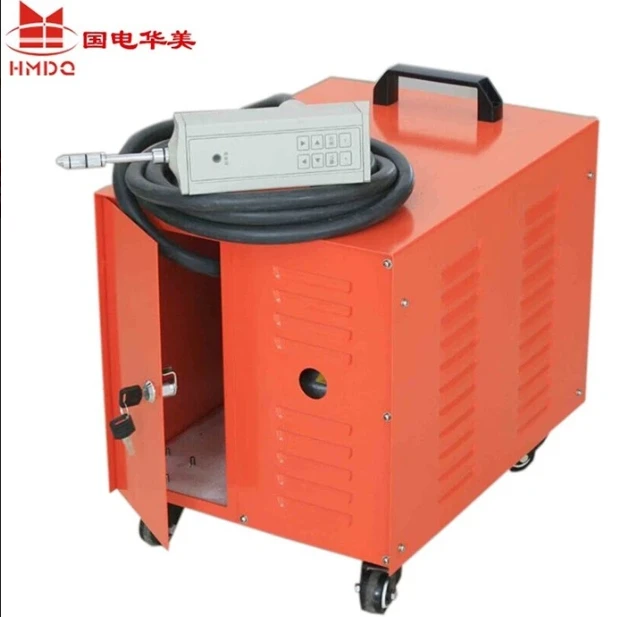
Figure 4- The bench-grade end of the range. Different job, different instrument: this one samples gas and reads a concentration, rather than sweeping a probe across a joint.
One line on the datasheets deserves reading carefully, because it changes how the numbers should be used. SAE J1627 is a refrigerant standard. The grams-per-year figures quoted for halogen-type detectors are derived from refrigerant calibration; SF6 is detected because it is also strongly electronegative, not because the instrument was calibrated against it. This does not make the instrument unsuitable - for locating a leak, sensitivity to the negative-going signal is precisely the requirement - but it does mean the g/year figure on a handheld is a sensitivity class, not a certified SF6 leak rate. If a number has to stand up as a leak rate, bag it and calculate it.
What a pointer cannot do
Four boundaries are worth stating plainly, because crossing them is where reports go wrong.
It cannot see through the enclosure. The pointer reports gas at the probe tip, not which of five joints forty centimetres away is responsible. On a crowded bay, the final attribution needs an enclosure and a dwell time.
It cannot separate a leak from a halogen-bearing contaminant. Solvent, cleaning agent and certain fire-extinguishing residues trip the same sensor. The test is simple and rarely done: if the reading follows your own cleaning cloth, it is not a leak.
It cannot measure a leak in a ventilated room. Ventilation dismantles the plume before the probe arrives, and the reading becomes a measurement of the air-change rate.
It cannot replace the pressure record. The only routes to a defensible annual leakage rate are a temperature-compensated pressure trend over months (correcting to 20 °C, since raw gauge pressure drifts with ambient temperature and nothing else) or a bagged measurement with a stated volume. The pointer contributes to neither.
It is also worth keeping leak detection and gas quality apart. A compartment can be gas-tight and still be out of specification on moisture or decomposition products, and that is a different instrument and a different standard - IEC 60480 and GB/T 8905, with dew point and purity measured separately. Goldhome covers that side of the problem with SF6 moisture analysers, combined purity and dew-point analysers, the HM3030 gas density relay that produces the pressure record in the first place, and SF6 recovery machines for handling gas that has to come out. The full range is indexed at SF6 gas analysers and SF6 gas testing instruments.


