



Offline Partial Discharge Measurement and Localization for Medium-Voltage XLPE Power Cables | Goldhome
Medium-voltage cross-linked polyethylene (XLPE) power cables are widely used in industrial power distribution, renewable energy projects, and utility networks. Although XLPE insulation offers good electrical and thermal performance, manufacturing defects, installation damage, poorly prepared cable accessories, and insulation aging can contribute to partial discharge (PD) activity.
A standalone partial discharge measurement and localization system enables engineers to evaluate cable insulation under controlled offline test conditions and, when supported by the system configuration, estimate the location of PD sources along the cable.
For cable manufacturers, testing laboratories, commissioning teams, and maintenance contractors, offline PD testing can provide useful information about insulation condition and help guide further investigation.
1. What Is Offline Partial Discharge Testing?
Partial discharge is a localized electrical discharge that only partially bridges the insulation between conductors. It may occur in insulation defects, voids, interfaces, or cable accessories when the local electric field is sufficient to initiate discharge activity.
Offline PD testing is performed when the cable is disconnected from its normal energized service and connected to a suitable external test setup.
A typical system may include:
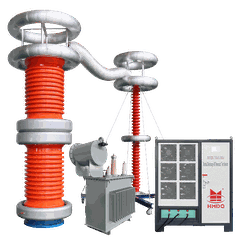
An external high-voltage test source
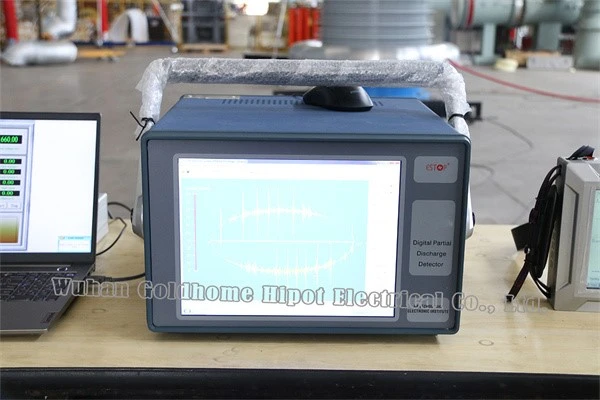
A partial discharge measuring unit
Coupling and signal acquisition components
Connecting cables and suitable accessories
Software for data visualization and analysis
Optional PD localization hardware and analysis functions
The test voltage, measurement circuit, and procedure should be selected according to the cable specification, test objective, and applicable standards.
2. Why Test Medium-Voltage XLPE Power Cables for PD?
PD testing can help identify localized insulation activity that may not be apparent from a conventional insulation resistance measurement alone.
-
Cable Insulation Defects
Voids, contamination, protrusions, and other localized defects may produce PD under suitable electrical stress. Detecting such activity can help engineers identify cable sections requiring further assessment.
-
Cable Joint and Termination Problems
Cable joints and terminations involve interfaces and stress-control components that must be installed correctly. Defects in preparation, assembly, or insulation interfaces may contribute to localized discharge activity.
-
Factory Quality Control
Cable manufacturers may use PD measurements as part of specified routine, sample, or acceptance tests. The applicable test requirements depend on the cable type, rated voltage, product standard, and purchase specification.
-
Commissioning and Maintenance
Offline PD measurements can support investigations after cable installation, repairs, or suspected insulation problems. Results can be compared with other diagnostic information to help determine whether further inspection is needed.
A PD result should not be interpreted in isolation. The significance of detected activity depends on its magnitude, pattern, location, test voltage, background noise, and the cable system's acceptance criteria.
3. How Does an Offline PD Measurement System Work?
The basic process combines high-voltage excitation with sensitive signal measurement.
Step 1: Isolate and Prepare the Cable
The cable must be safely disconnected from the network, isolated, discharged, and grounded in accordance with the approved procedure. The test section and any connected accessories should be identified before the test arrangement is established.
Step 2: Connect the Test Source
A suitable external test source applies the specified voltage to the cable. The selected source must be compatible with the cable capacitance, required test voltage, and intended PD measurement method.
Step 3: Acquire PD Signals
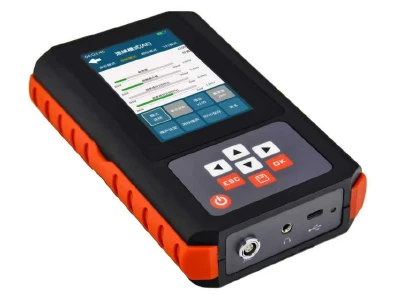
The measuring system detects and processes signals associated with PD activity. Depending on the measurement approach, the system may display apparent charge, pulse activity, phase-resolved patterns, or other diagnostic information.
Step 4: Evaluate Measurement Quality
Background interference must be assessed before drawing conclusions. Grounding, cable layout, external electrical noise, coupling arrangements, and calibration can all influence measurement quality.
Step 5: Analyze the Results
Engineers assess PD activity in relation to the applied voltage, measurement conditions, cable configuration, and relevant acceptance criteria. If localization is available, the system can analyze signal timing or other suitable characteristics to estimate the position of the PD source.
4. How Does PD Localization Help Identify Cable Defects?
PD measurement and PD localization are related but distinct functions.
PD measurement determines characteristics of detected discharge activity, such as apparent charge under a suitable charge-based measurement method.
PD localization estimates where the discharge source is located along the cable or within the tested cable system.
For cable systems, localization may use signal arrival-time differences, pulse propagation, reflections, or other methods supported by the equipment. The selected method depends on the cable structure, measurement bandwidth, cable length, signal attenuation, and system configuration.
Localization can help maintenance teams narrow the inspection area and investigate potential problems at cable joints, terminations, or other sections. However, the accuracy of the location estimate must be understood, and a result should be confirmed using appropriate diagnostic procedures.
A standalone PD measuring instrument does not necessarily provide localization. Buyers should confirm that the proposed system includes the required localization function and is suitable for the intended cable length and configuration.
5. Key Considerations When Selecting an Offline PD System
Compatibility with Medium-Voltage XLPE Cables
Confirm the supported voltage range, cable capacitance, test arrangement, and intended cable applications. The system should be suitable for the specific cable type and test objective.
Test Voltage Source
The external source must supply the required voltage under the expected capacitive load. Its waveform and frequency must also be appropriate for the selected PD measurement method.
Measurement Sensitivity and Calibration
Review the measurement range, sensitivity, calibration arrangements, and performance under specified conditions. A low background noise level can improve signal discrimination, but it is not the same as measurement sensitivity or overall accuracy.
Localization Capability
Check whether the system supports PD source localization, which localization method is used, and what cable configurations and lengths are supported.
Interference Rejection
Cable testing environments can contain electrical interference that resembles or masks PD signals. Signal filtering, noise analysis, suitable grounding, and proper test-circuit design are important for obtaining interpretable results.
Software and Test Reports
Data recording, waveform or phase-resolved pattern display, location estimates, and report export can help engineers compare test results and maintain traceable records.
Portability and Field Use
For commissioning and maintenance work, consider the transport case, connection arrangements, operating environment, setup time, and availability of site power.
6. Which Standards Should Be Considered?
IEC 60270:2025, High-voltage test techniques – Charge-based measurement of partial discharges, provides requirements and guidance for charge-based PD measurement, including measuring circuits, calibration, test procedures, and interference considerations. It also discusses the limitations of measurements and alternative approaches to PD detection and localization.
For power cables, the applicable product and test standards must also be considered. The correct requirements depend on the cable voltage class, cable construction, whether the test is a factory test or an on-site diagnostic test, and the specification agreed by the manufacturer and customer.
Engineers should not assume that a general PD measurement standard alone defines every acceptance criterion for medium-voltage XLPE cable testing.
7. Goldhome and Cable Testing Solutions
Goldhome provides high-voltage electrical testing equipment and solutions for power equipment manufacturers, utilities, testing laboratories, and electrical service providers.
For medium-voltage XLPE cable applications, an offline PD solution should be configured around the cable's electrical characteristics, the external test source, the required measurement method, and whether localization is needed.
When evaluating a Goldhome solution, confirm the available PD measurement functions, localization capability, supported test voltage and waveform, calibration arrangements, and reporting options against the project requirements.
Explore related high-voltage and cable testing solutions at https://www.goldhomehipot.com.
Conclusion
Offline partial discharge measurement and localization can support insulation assessment for medium-voltage XLPE power cables during factory testing, commissioning, and maintenance investigations.
A suitable system combines a compatible external test source with reliable PD signal acquisition and, where required, a dedicated localization function. Careful test preparation, interference control, calibration, and interpretation against applicable criteria are essential for meaningful results.
For cable testing projects, selecting the system according to the cable configuration and diagnostic objective helps engineers obtain more useful information about potential insulation defects and determine where further investigation may be needed.


