

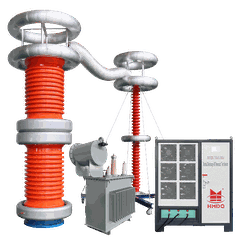


Distinction Between Resonance in Series Resonance Test Equipment and Parallel Resonance
Series resonant test setups and parallel resonant test setups are two common types of resonant test equipment within the electrical engineering field. Both are employed to determine the resonant frequencies of electrical apparatus such as harmonic filters, transformers, and capacitors within power systems. However, there exist several distinct differences between them.

Firstly, a series resonant test apparatus comprises a circuit formed by connecting an inductor and a capacitor in series. The resonant frequency of the inductor and capacitor constitutes the resonant frequency of this circuit. Conversely, a parallel resonant test apparatus consists of a circuit formed by connecting an inductor and a capacitor in parallel. The resonant frequency of the inductor and capacitor also represents the resonant frequency of this circuit.
Secondly, the resonant frequency of a series resonant test apparatus is typically higher than that of a parallel resonant test apparatus. This occurs because the capacitor and inductor in a series configuration are connected in series. The voltage across the capacitor and the current through the inductor are out of phase, causing their effects to cancel each other out. Consequently, the resonant frequency of the entire circuit increases.
Finally, practical applications of series and parallel resonant test sets also differ. Series resonant test sets are typically employed to determine the resonant frequency of low-voltage electrical equipment, whereas parallel resonant test sets are more suitable for assessing the resonant frequency of high-voltage electrical equipment.
In summary, although both series and parallel resonance test sets are employed to determine the resonant frequencies of electrical equipment such as harmonic filters, transformers, and capacitors within power systems, distinct differences exist between them. When selecting an appropriate resonance test set, consideration must be given to the specific electrical equipment and operational context.


