

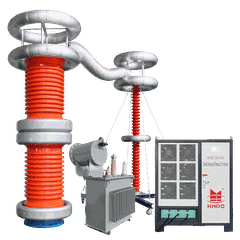


Transformer Tester vs Transformer Test Bench
Choosing between a transformer tester and a transformer test bench depends mainly on the type of transformer testing you need to perform, the number of tests required, and whether the equipment will be used in the field or as part of a factory testing line.
The two terms are sometimes used interchangeably, but they describe different levels of testing equipment.
A transformer tester is generally a single-function or dedicated measurement instrument. A transformer test bench is an integrated system that combines selected test functions with power supplies, measurement devices, control equipment, and safety protection. The exact scope depends on the system configuration.
Goldhome supplies both types of equipment. Its transformer testing range includes transformer turns ratio testers, DC resistance testers, tan delta testers, SFRA equipment, load and no-load loss testers, OLTC analyzers and integrated transformer test benches.
Transformer Tester: A Separate Instrument for a Specific Test

Goldhome / HMDQ individual transformer testers: TTR, DC winding resistance, loss, insulation resistance, AC withstand and partial discharge equipment.
A transformer tester is generally selected when the testing requirement is clear and limited to one or several particular parameters.
For example, Goldhome's transformer testing range includes:
- Transformer Turns Ratio Tester
- Transformer DC Resistance Tester
- Transformer Tan Delta Tester
- Sweep Frequency Response Analyzer
- Transformer No-Load / Load Tester
- Transformer Capacity Tester
- On-Load Tap Changer Analyzer
Each instrument has its own measurement function.
A TTR tester, for example, is designed to measure transformer ratio, connection group and related parameters. Goldhome's TTR equipment covers a ratio range up to 10,000 depending on the model and is designed for both field and laboratory use.
A DC resistance tester is used to measure winding resistance. Different output-current configurations can be selected according to the transformer and the required test speed.
For transformer winding condition analysis, Goldhome also offers an SFRA tester, while a tan delta tester is used for dielectric loss and capacitance measurements.

Typical transformer tester setup
Transformer → Test Instrument → Measurement → Test Report
The operator normally changes the instrument or test connection when moving from one test to another.
This arrangement is useful when:
Only one particular test is required
Testing is carried out at different locations
The equipment needs to be transported regularly
A maintenance team already has several individual instruments
The customer wants to add testing functions gradually
The budget is allocated to specific test functions rather than a complete test line

HM5010 Sweep Response Analyser is currently being tested
Transformer Test Bench: Several Tests in One System
A transformer test bench takes a different approach.
Instead of buying separate instruments for each test, the main testing functions are integrated into a coordinated system.
Goldhome describes its comprehensive transformer test bench as an integrated testing system for power and distribution transformers. Depending on the configuration, it can combine turns ratio, winding resistance, no-load and load testing, insulation testing, power-frequency withstand testing, induced withstand testing and other functions.
A typical Goldhome transformer test bench can include:
- Automatic control console
- Voltage regulator
- Step-up transformer
- Current transformer
- Voltage transformer
- Measurement system
- No-load/load loss tester
- DC resistance testing module
- Ratio testing module
- Safety interlock
- Emergency stop
- Software and data management
Goldhome's HM5050 is offered as an integrated transformer test bench. One published configuration covers 50 kVA to 5000 kVA, while other configurations vary according to transformer rating, voltage level, test items, and system design.
The important point is that test-bench capacity and configuration should be specified according to the customer's transformer ratings and required tests, rather than selected from one universal specification.

Transformer Tester vs Transformer Test Bench: Main Differences
|
Item |
Transformer Tester |
Transformer Test Bench |
|
Equipment type |
Individual testing instrument |
Integrated testing system |
|
Main purpose |
Specific measurement or test |
Multiple transformer tests |
|
Typical use |
Field testing, maintenance, diagnosis |
Factory testing, laboratory, production |
|
Test functions |
Usually one main function |
Several functions |
|
Mobility |
Usually portable |
Usually stationary or semi-stationary |
|
Installation |
Simple |
Requires system installation |
|
Wiring |
Separate wiring for different instruments |
Centralized test connections |
|
Automation |
Depends on instrument |
Usually higher |
|
Data management |
Instrument-level |
Centralized system |
|
Capacity |
Depends on individual tester |
Designed around transformer capacity |
|
Expansion |
Add separate instruments |
Configure system modules |
|
Factory production |
Suitable for individual tests |
Suitable for repeated testing |
|
Customization |
Mainly instrument specifications |
System configuration can be customized |
|
Investment |
Lower for one test function |
Higher initial system investment |
|
Best suited for |
Maintenance teams and field engineers |
Transformer manufacturers and testing laboratories |
1. Testing Functions
This is the biggest difference.
A transformer tester normally answers a specific question.
For example:
TTR Tester
Is the transformer turns ratio correct?
DC Resistance Tester
Is the winding resistance within the expected range?
Tan Delta Tester
What is the dielectric loss and capacitance of the insulation system?
SFRA Tester
Has the mechanical structure of the transformer winding or core changed?
No-Load / Load Tester
What are the transformer's no-load and load characteristics?
Goldhome's individual tester range is structured around these dedicated measurement requirements.
A test bench answers a broader requirement:
Can we complete the main factory tests for this transformer from one integrated testing system?
For a transformer manufacturer, this difference can be significant.
2. Field Testing vs Factory Testing
Product application scene: transformer TTR testing at a transformer installation site.
Transformer Tester
Individual testers are particularly convenient for field work.
A maintenance engineer may travel to a substation with:
TTR tester
DC resistance tester
Insulation resistance tester
Tan delta tester
Other diagnostic instruments
The equipment can be selected according to the transformer condition and the planned maintenance work.
Goldhome's TTR tester, for example, uses a compact design and lithium-battery power on the referenced model, making this type of instrument suitable for on-site transformer testing.

Transformer Test Bench
A test bench is normally installed at a fixed testing location.
It makes more sense when the same testing sequence is repeated for many transformers.
Typical users include:
- Transformer manufacturers
- Transformer repair factories
- Electrical laboratories
- Third-party testing organizations
- Power equipment testing centers
- Research institutions
Goldhome specifically describes its comprehensive test bench for transformer manufacturers, power companies, industrial users, repair companies and third-party testing organizations.
3. Test Speed and Wiring


HM5010 Sweep Frequency Response Analyzer testing equipment, illustrating centralized wiring and equipment selection.
Using separate transformer testers means the operator may need to:
- Connect the first instrument
- Complete the test
- Disconnect the equipment
- Connect another instrument
- Repeat the process
This is manageable for occasional testing.
It becomes less convenient when dozens or hundreds of transformers must be tested.
A comprehensive test bench uses a centralized connection and control arrangement.
A configured Goldhome transformer test bench can use a dedicated wiring panel and centralized control structure. Depending on the configuration, the system can collect measurement data, perform calculations, store results, and support test reporting.
This makes a test bench particularly useful for production testing where the same procedure is repeated every day.
4. Automation
Individual transformer testers can already provide automatic measurement.
For example, Goldhome's transformer instruments can automatically calculate relevant test parameters rather than requiring engineers to manually read several meters and perform calculations.
A test bench takes automation further.
The system can coordinate:
Test connection → Voltage/current control → Measurement → Calculation → Result → Report
Goldhome's HM5050 product information describes intelligent control, automatic operation, and data management for configured transformer factory testing systems.
For a production line, centralized automation can reduce repetitive manual operations.
5. Transformer Capacity
Capacity is another important consideration, but the relevant parameter depends on the specific test function and the complete system design.
A standalone tester is generally specified according to its own measurement range.
For example:
TTR tester → ratio measurement range
DC resistance tester → output current and resistance range
No-load/load tester → voltage, current and power measurement range
Tan delta tester → voltage, capacitance and dielectric-loss measurement range
A transformer test bench is different.
The complete system must be designed around the transformer being tested.
One published HM5050 configuration covers 50 kVA to 5000 kVA with 6, 11, 24 and 36 kV/380 V configurations. Other Goldhome test-bench configurations may have different capacity ranges. These values should not be treated as a universal HM5050 specification.
Therefore, when requesting a transformer test bench, the buyer should provide:
Transformer rated capacity
- High-voltage rating
- Low-voltage rating
- Frequency
- Impedance
- Transformer type
- Required test items
- Maximum test current
- Required withstand voltage
- Factory power supply
Without these details, it is difficult to define the correct test-bench configuration.
6. Which Tests Should Be Included?
There is no need to put every possible transformer test into every test bench.
The configuration should follow the customer's production and inspection requirements.
For routine factory testing, the actual test list should be taken from the applicable transformer standard, product specification, and customer requirements.
A possible configuration may include, depending on the transformer and applicable test requirements:
- Turns ratio
- Winding resistance
- No-load loss
- No-load current
- Load loss
- Short-circuit impedance
- Insulation resistance
- Power-frequency withstand
- Induced withstand
Goldhome lists these functions among the capabilities of its comprehensive transformer test systems, but the actual scope depends on the configured system and technical specification.
For additional or specialized testing
The system can be configured with additional functions such as:
- Tan delta
- Partial discharge
- Temperature rise
- OLTC testing
- Other diagnostic measurements
The exact configuration should be determined from the transformer type and the customer's test standard.
7. Transformer Tester or Test Bench: Which One Fits Your Work?
Instead of asking which equipment is universally better, start with the testing workflow.
Choose individual transformer testers when:
You mainly perform field testing
The testing locations change frequently
Only one or two measurements are normally required
Portability is important
Different teams need separate instruments
You want to build your testing capability step by step
For example, a substation maintenance team may need a TTR tester this month and a winding resistance tester for another maintenance task. Buying separate instruments allows the team to select the equipment needed for each job.
Choose a transformer test bench when:
You manufacture transformers
You test many units every month
Several tests are required for every transformer
Test procedures need to be standardized
Centralized operation is preferred
Automatic data recording is required
Test reports need to be generated consistently
The testing area can accommodate a fixed system
For a transformer factory, the value of a test bench is not simply the number of functions inside the system. It is the way those functions are organized into a repeatable testing process.
Transformer Tester vs Transformer Test Bench: A Practical Example

Transformer laboratory scene showing a fixed testing environment and high-voltage test equipment.
Consider a transformer manufacturer producing distribution transformers.
Option A - Individual Testers
The factory purchases:
- TTR Tester
- DC Resistance Tester
- Insulation Resistance Tester
- No-Load/Load Tester
- Withstand Voltage Equipment
- Each device performs its own test.
- The operator moves between instruments and records the results.
Option B - Transformer Test Bench
The factory purchases a customized transformer test bench.
The system combines the required measurement and test functions around one test area.
The operator follows the defined test sequence, the system collects the measurement data, calculates the required values and produces the test record.
For high-volume transformer production, this difference affects more than equipment count. It also affects wiring, operator workload, test consistency, floor layout and data management.
What Goldhome Recommends for Transformer Manufacturers
At Goldhome, we do not treat a transformer test bench as simply a larger transformer tester.
The two products serve different testing workflows.
Goldhome's individual transformer testers are suitable when the customer needs a particular measurement or portable diagnostic capability. Its comprehensive test benches are designed around multiple transformer tests and can be configured according to transformer capacity, voltage level and required test items.
For example, Goldhome's HM5050 transformer test bench can be configured with a control console, voltage regulation system, step-up transformer, measurement equipment, and other testing units. Published configurations include functions such as no-load/load testing, power-frequency withstand testing, induced withstand testing, and DC resistance testing; additional functions depend on the project configuration.
Goldhome has published project news covering transformer test-bench deliveries to overseas customers, including India and Mexico.
How to Specify a Transformer Test Bench
Before contacting Goldhome for a quotation, prepare the following information.
Transformer Information
- Transformer type
- Rated capacity
- High-voltage rating
- Low-voltage rating
- Frequency
- Number of phases
- Impedance
- Connection group
- Maximum transformer dimensions
Testing Requirements
- Turns ratio
- DC resistance
- No-load loss
- Load loss
- Short-circuit impedance
- Insulation resistance
- Power-frequency withstand
- Induced withstand
- Temperature rise
- Tan delta
- Partial discharge
- OLTC testing
Factory Information
- Available power supply
- Test room dimensions
- Grounding arrangement
- Required automation level
- Data/report requirements
- Local electrical standards
Goldhome can then design the test bench around the actual transformer and test sequence instead of supplying an oversized or incomplete configuration.
Transformer Tester vs Transformer Test Bench: Quick Decision Guide
|
Your requirement |
Recommended equipment |
|
TTR measurement only |
Transformer Turns Ratio Tester |
|
Winding resistance only |
DC Resistance Tester |
|
Transformer insulation diagnosis |
Insulation Resistance / Tan Delta Tester |
|
Winding deformation diagnosis |
SFRA Tester |
|
No-load and load loss measurement |
No-Load/Load Tester |
|
Field transformer testing |
Individual Transformer Testers |
|
Several routine tests |
Transformer Test Bench |
|
Repeated factory testing |
Transformer Test Bench |
|
High-volume transformer production |
Automated Test Bench |
|
Customized transformer testing line |
Integrated Transformer Test System |
|
Third-party transformer laboratory |
Comprehensive Test Bench |
|
Transformer maintenance team |
Portable Individual Testers |
Final Consideration
A transformer tester is usually the right tool when the job starts with a specific measurement.
A transformer test bench makes more sense when the requirement starts with a complete testing process.
For example:
"I need to measure transformer turns ratio."
→ TTR Tester.
"I need to test winding resistance."
→ DC Resistance Tester.
"I need to test the electrical performance of every transformer leaving our factory."
→ Transformer Test Bench.
That distinction is more useful than comparing the two products only by price or number of functions.
Goldhome provides both individual transformer testing instruments and customized comprehensive transformer test benches. The correct choice depends on the transformer rating, required test items, testing location, production volume and level of automation required.


