



CT/PT Analyzer Meter: Functions, Applications, and How to Choose
A Practical Guide to Current Transformer and Voltage Transformer Testing
Current transformers (CTs) and potential transformers (PTs), also known as voltage transformers (VTs), are essential components in electrical power systems. They provide measurement signals for energy meters, monitoring equipment, and protective relays.
If a CT or PT has an incorrect transformation ratio, polarity, or secondary circuit condition, it can affect metering accuracy and protection system performance. Regular testing helps verify transformer characteristics during commissioning, maintenance, and troubleshooting.
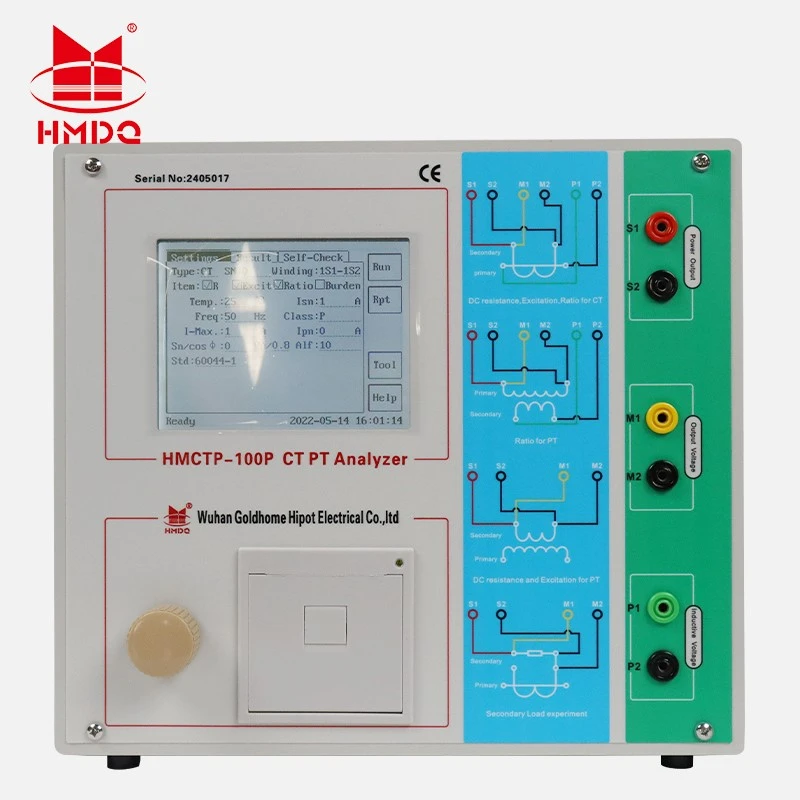
A CT/PT analyzer meter is designed to test key electrical parameters of instrument transformers. Depending on the model, it can measure transformation ratio, polarity, excitation characteristics, winding resistance, secondary burden, ratio error, and phase displacement.
For power utilities, substation maintenance teams, transformer manufacturers, and electrical testing contractors, selecting the right CT/PT analyzer requires matching the instrument's functions and measurement performance to the intended testing application.
1. What Is a CT/PT Analyzer Meter?
A CT/PT analyzer meter is an electrical testing instrument used to evaluate the performance of current transformers and voltage transformers.
A CT converts high primary current into a lower secondary current suitable for measurement and protection. A PT or VT converts high primary voltage into a lower secondary voltage for meters, relays, and monitoring devices.
Both types of instrument transformers must operate within their specified performance limits.
A suitable CT/PT analyzer can help users check whether a transformer meets its required electrical characteristics and identify potential problems before they affect the connected system.
Common applications include:
Substation commissioning and acceptance testing.
Routine inspection and preventive maintenance.
CT and PT performance verification.
Troubleshooting metering and protection circuits.
Transformer manufacturing and quality control.
Testing following repair or equipment replacement.
The exact test coverage depends on the analyzer model and its supported testing methods.
2. What Tests Can a CT/PT Analyzer Perform?
Different CT/PT analyzers provide different combinations of testing functions. The following are common functions available on comprehensive instrument transformer testers.
2.1 Transformation Ratio Test
The transformation ratio describes the relationship between the primary and secondary electrical quantities.
The measured ratio is compared with the rated ratio to identify deviations.
An incorrect ratio can lead to inaccurate current or voltage readings and affect the interpretation of system operating conditions.
2.2 Polarity Test
Polarity testing verifies the relationship between the primary and secondary terminals.
Correct polarity is important when CTs and PTs are connected to differential protection, directional protection, energy meters, and other measurement circuits.
Incorrect connections can produce misleading measurements or cause protection systems to operate improperly.
2.3 Excitation Characteristic Test
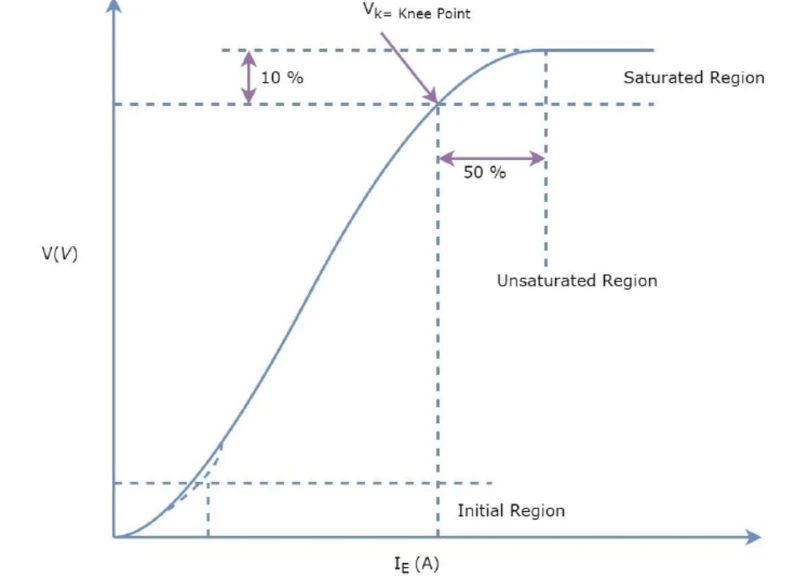
The excitation characteristic test evaluates the relationship between applied secondary voltage and excitation current.
For CTs, the resulting curve helps assess core magnetization behavior and identify the knee-point region where applicable.
This information is particularly important for protection CTs, which must maintain suitable performance under fault conditions.
For PTs, excitation characteristics can also be relevant, depending on the transformer design and test requirements.
2.4 Secondary Winding Resistance Test
Winding resistance measurement helps identify abnormal resistance that may result from poor connections, winding damage, or other defects.
Resistance results should be evaluated against the manufacturer's data, temperature conditions, and relevant acceptance criteria.
2.5 Secondary Burden Test
Secondary burden refers to the electrical load connected to the instrument transformer's secondary circuit.
Excessive burden can affect transformer performance and measurement accuracy, particularly when the burden exceeds the specified operating range.
A suitable test instrument can help evaluate the connected secondary load or burden according to its available functions and measurement method.
2.6 Ratio Error and Phase Displacement Test
CTs and PTs used for metering must meet their specified accuracy requirements.
Ratio error describes the deviation between the actual transformation behavior and the ideal ratio. Phase displacement describes the angular difference between the relevant primary and secondary quantities under specified conditions.
These parameters are important for precision metering and applications where phase relationships affect measurement results.
2.7 Demagnetization
CT cores can retain residual magnetism after certain tests or operating events. Residual magnetism may affect subsequent measurements and the CT's magnetic behavior.
Some CT/PT analyzers include an automatic demagnetization function to reduce residual magnetism after testing.
Users should verify that this function is available on the selected model and follow the manufacturer's operating procedure.
3. How Does a CT/PT Analyzer Work?
The operating principle depends on the analyzer's design. Many modern portable CT/PT analyzers use controlled test signals, electronic measurement circuits, and software-based calculations to evaluate transformer characteristics.
A typical testing workflow includes the following steps.
Step 1: Identify the Transformer
Confirm whether the device under test is a CT or PT. Record its rated ratio, accuracy class, winding configuration, and other relevant nameplate information.
Step 2: Isolate the Equipment
Follow the applicable electrical safety procedure. The transformer must be isolated and connected according to the instrument manufacturer's instructions.
Step 3: Connect the Test Leads
Connect the analyzer to the designated transformer terminals. Verify terminal identification, grounding, wiring integrity, and the required isolation of external circuits.
Step 4: Select the Test Function
Choose the required test, such as ratio, polarity, excitation characteristics, or winding resistance, depending on the analyzer's supported functions.
Step 5: Execute the Test
The analyzer applies the specified test signal, measures the response, and calculates the relevant parameters.
Some models automate several test sequences and display curves or calculated results.
Step 6: Review and Record the Results
Compare the measured values with the nameplate data, applicable standards, and project acceptance requirements. Save the results for commissioning records or future maintenance comparisons.
The instrument's operating manual and the applicable test procedure should always take priority over a general workflow.
4. CT/PT Analyzer Meter Applications
-
Electrical Substations
Substations use CTs and PTs for protection, metering, monitoring, and control.
A CT/PT analyzer can support commissioning tests, periodic inspections, and troubleshooting when instrument transformer performance is in question.
-
Power Utilities and Grid Maintenance
Power utilities manage large numbers of instrument transformers across transmission and distribution networks.
Regular testing helps maintenance teams verify key transformer characteristics and maintain consistent testing records.
-
Transformer Manufacturers
Manufacturers may use CT/PT testing equipment for production inspection, quality control, and final verification.
For production environments, the choice of equipment should consider measurement accuracy, test repeatability, throughput, and data management requirements.
-
Protection Relay Testing
Protection relays depend on accurate current and voltage inputs. Incorrect CT or PT characteristics can affect the signals received by protection systems.
Testing instrument transformers helps verify their performance before relay commissioning or during fault investigations.
However, CT/PT testing and relay functional testing are different activities. A CT/PT analyzer does not automatically replace a dedicated relay test set.
5. CT/PT Analyzer vs. Traditional CT Testing Equipment
Different testing technologies can serve different purposes. The appropriate choice depends on the transformer type, test requirements, and the level of measurement verification required.
| Comparison Factor | Integrated CT/PT Analyzer | Traditional Power-Frequency Test Setup |
|---|---|---|
| Test method | Depends on the analyzer's measurement principle | Uses a conventional power-frequency test arrangement |
| Portability | Many models are designed for field use | May require larger or separate test equipment |
| Test automation | Some models support automated sequences | May involve more manual setup and operation |
| Test coverage | Depends on the selected model | Depends on the complete test setup |
| Data processing | May provide automatic calculations and report storage | May require separate calculations or recording |
| Best suited for | Field testing, commissioning, and maintenance where supported | Applications requiring conventional power-frequency methods or specialized verification |
Some CT/PT analyzers use variable-frequency or low-frequency methods to evaluate excitation characteristics and calculate related parameters. Others use different test principles.
A variable-frequency analyzer should not be assumed to be equivalent to every conventional power-frequency test setup under all conditions. Where a specific test method is required by a standard, contract, or manufacturer, confirm that the instrument supports it.
6. How to Choose the Right CT/PT Analyzer
Before purchasing a CT/PT analyzer meter, consider the following factors.
6.1 CT and PT Compatibility
Confirm whether the instrument supports both CT and PT testing and whether it covers the required transformer designs and accuracy classes.
For protection applications, verify support for the relevant protection CT classes and specialized requirements where applicable.
6.2 Test Function Coverage
List the tests required for your application.
Typical requirements may include:
Transformation ratio and polarity.
Excitation characteristics and knee-point voltage.
Secondary winding resistance.
Secondary burden.
Ratio error and phase displacement.
Automatic demagnetization.
Data storage and report generation.
Do not assume that all analyzers support every function.
6.3 Measurement Range and Accuracy
Check the supported CT and PT ratio ranges, resistance range, burden range, phase measurement range, and measurement accuracy.
These parameters should be appropriate for the equipment under test and the required acceptance criteria.
6.4 Testing Method
Determine whether a variable-frequency method, power-frequency method, or another specific approach is required.
Review the manufacturer's technical documentation to understand how the instrument performs each test and how the results are calculated.
6.5 Portability and Field Operation
For substation maintenance, consider instrument weight, power requirements, connection arrangements, operating temperature, and ease of use.
A compact instrument can simplify field work, but portability should not take priority over the necessary measurement functions.
6.6 Software and Reporting
Data storage and report generation can reduce manual recording and support traceability.
If the instrument will be used for routine maintenance, verify its available report formats, data export functions, software compatibility, and language options.
6.7 Safety and Technical Support
Check the required grounding arrangements, test lead ratings, isolation procedure, and protection functions.
Also consider operator training, calibration services, technical support, and availability of replacement accessories.
7. Goldhome CT/PT Analyzer: HMCTP-100P Series
Goldhome (Wuhan Goldhome Hipot Electrical Co., Ltd.) provides CT/PT testing equipment for instrument transformer testing and electrical maintenance applications.
The HMCTP-100P series is a CT/PT testing solution intended to evaluate transformer characteristics using its supported test functions. Depending on the configuration, these functions include ratio, polarity, excitation characteristics, winding resistance, secondary burden, ratio error, and phase displacement testing.
For field testing and commissioning, an integrated analyzer can help simplify test connections and organize measurement results.
Before selecting a model, users should confirm:
The supported CT and PT types.
The applicable measurement ranges and accuracy.
The required test functions.
Compatibility with protection CT classes.
The supported test method.
Data recording and report requirements.
For product details and technical consultation, visit the official Goldhome product page:
CT/PT Analyzer: https://www.goldhomehipot.com/ct-pt-tester/ct-pt-analyzer/
8. Important Safety Considerations
CT/PT testing involves electrical connections that must be handled carefully.
Before testing:
Isolate the transformer and connected circuits according to the approved procedure.
Confirm the correct terminals and test lead connections.
Apply the grounding requirements specified by the manufacturer.
Ensure that external circuits cannot introduce hazardous voltages or currents.
Follow the instrument's specified operating limits.
Disconnect test leads only after the test output has been stopped and the circuit is in a safe state.
Important CT safety rule: Never open-circuit an energized CT secondary circuit. A dangerous voltage can develop across the secondary terminals. Follow the approved isolation and shorting procedures before disconnecting secondary wiring.
Testing should be performed by qualified personnel using the applicable safety procedures and equipment instructions.
9. Frequently Asked Questions
What is a CT/PT analyzer meter used for?
A CT/PT analyzer is used to evaluate the electrical characteristics of current transformers and voltage transformers. Depending on the model, it can test ratio, polarity, excitation characteristics, winding resistance, burden, ratio error, and phase displacement.
Can one analyzer test both CTs and PTs?
Yes, some integrated analyzers support both CT and PT testing. Confirm the supported transformer types and test functions for the specific model.
Why is CT excitation testing important?
Excitation testing helps evaluate CT core magnetization characteristics and determine the knee-point region where applicable. This information is important for assessing the suitability of protection CTs for their intended duty.
What is the difference between a CT analyzer and a CT/PT analyzer?
A CT analyzer is primarily designed for current transformer testing. A CT/PT analyzer supports both current and voltage transformer tests, provided the required functions are included in the model.
Can a CT/PT analyzer be used for substation commissioning?
Yes. A suitable analyzer can support instrument transformer checks during commissioning, subject to the project's testing requirements and the equipment's supported functions.
What information is needed to select a CT/PT analyzer?
Important details include CT and PT ratios, transformer types, accuracy classes, required test items, measurement ranges, testing methods, and reporting requirements.
Conclusion
A CT/PT analyzer meter is an important tool for verifying instrument transformer performance in power systems. It supports commissioning, maintenance, troubleshooting, and quality control by measuring key electrical characteristics.
When selecting a CT/PT analyzer, prioritize test coverage, measurement accuracy, transformer compatibility, testing method, safety, and data management.
For utilities, substations, and electrical testing contractors, a well-matched analyzer can help improve testing efficiency and provide consistent records for instrument transformer maintenance.


