



Portable GC vs Laboratory GC: What You Actually Gain and Lose in the Field
A Practical Comparison of Portable and Laboratory Gas Chromatographs for Transformer Oil Analysis
Gas chromatography (GC) is widely used to separate and measure gas components in analytical samples. In the power industry, it plays an important role in dissolved gas analysis (DGA), which helps assess the condition of oil-filled transformers.
When selecting gas chromatography equipment, one important decision is whether to use a portable GC for field testing or a laboratory GC for centralized analysis.
Portable systems offer mobility and the potential for faster on-site results. Laboratory systems generally provide greater flexibility for controlled workflows, specialized methods, and higher sample throughput. However, neither option is automatically more accurate or more cost-effective.
For power utilities, transformer manufacturers, and electrical testing laboratories, the right choice depends on the required gases, analytical performance, testing workload, sample handling procedures, and operating environment.
1. What Is the Difference Between Portable GC and Laboratory GC?
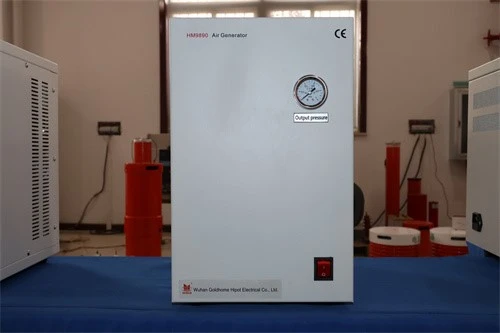
A portable gas chromatograph is designed to be transported between testing locations. Depending on its configuration, it may support on-site gas analysis, field inspections, and selected maintenance applications.
A laboratory gas chromatograph is generally designed for use in a fixed analytical environment. It may support a wider range of columns, detectors, sample introduction systems, and analytical methods, depending on the model.
For transformer oil DGA, both types may be suitable if the complete analytical method meets the required measurement specifications.
The main difference is not simply instrument size. It is how the equipment fits into the sampling, analysis, reporting, and maintenance workflow.
2. Portable GC vs Laboratory GC: Key Differences
| Comparison Factor | Portable GC | Laboratory GC |
|---|---|---|
| Main application | Field testing and mobile analysis | Centralized and specialized analysis |
| Mobility | Designed for transportation | Usually installed at a fixed location |
| Setup | May support rapid deployment, depending on configuration | May require laboratory utilities and setup |
| Sample turnaround | Can reduce delays associated with sample transportation | Depends on transport, laboratory workload, and analytical procedure |
| Analytical flexibility | Often optimized for selected applications | May support more configurable analytical methods |
| Sample throughput | Depends on model and field workflow | Can be suitable for high-volume testing |
| Operating environment | Must meet the manufacturer's specified field conditions | Usually operates in a more controlled environment |
| Calibration | Requires suitable field or laboratory calibration procedures | Can support centralized calibration and quality control |
| Infrastructure | May require fewer facilities, but still needs suitable gas, power, and environmental conditions | May require dedicated space, gas supplies, and supporting equipment |
| Best selection priority | Mobility and on-site decision support | Method flexibility, workload, and controlled analysis |
These are general distinctions. Actual performance depends on the specific equipment and validated analytical method. Some portable instruments are highly specialized, while some laboratory instruments are compact and straightforward to operate.
3. What You Gain with a Portable GC
3.1 Faster Access to Test Results
One of the main advantages of portable GC is the potential to analyze samples near the equipment being inspected.
In a traditional workflow, transformer oil samples may need to be collected, transported, registered, analyzed, and reported by a central laboratory. This process can introduce logistical delays.
A suitable portable system may shorten the time between sampling and obtaining analytical results.
However, on-site testing is not necessarily instantaneous. Sample preparation, gas extraction, calibration, chromatographic separation, and data review still take time.
3.2 Better Support for Field Maintenance
Portable GC can be useful when maintenance teams need to investigate abnormal operating conditions or compare measurements at multiple substations.
Potential applications include:
Routine transformer inspections.
Follow-up analysis after abnormal DGA results.
Field investigations of suspected transformer faults.
Maintenance activities at remote substations.
Testing where sample transportation is difficult or time-consuming.
The instrument must be validated for the intended application before its results are used to support maintenance decisions.
3.3 Reduced Sample Transportation
Analyzing suitable samples on site can reduce the number of samples that need to be sent to a central laboratory.
This may simplify logistics and help maintenance teams obtain results sooner. Nevertheless, portable testing still requires appropriate sampling procedures, contamination control, calibration, and result documentation.
3.4 Greater Operational Flexibility
Portable equipment can move with a field team instead of requiring all samples to be sent to one location.
For utilities with geographically distributed assets, this flexibility may be valuable when testing demand varies between substations or maintenance projects.
The actual benefit depends on how frequently field testing is required and whether the instrument can support the necessary analytical workload.
4. What You Lose with a Portable GC
Portability introduces trade-offs. Buyers should consider the following limitations before choosing a field-based system.
4.1 Potentially More Limited Analytical Flexibility
Some portable GCs are configured for a defined group of gases and a specific analytical method. They may not support the same range of columns, detectors, sample introduction options, or method-development capabilities as a more configurable laboratory system.
This is not a universal limitation. The available functions must be checked against the actual model specifications.
4.2 Field Conditions Can Affect Operation
Portable GC may be used in environments with changing temperatures, humidity, dust, vibration, or limited working space.
These conditions can affect system stability if the instrument is operated outside its specified limits.
Before purchasing, check the operating temperature and humidity ranges, power requirements, transport restrictions, and any environmental protection ratings provided by the manufacturer.
4.3 Calibration and Quality Control Remain Essential
A portable instrument is not automatically less accurate than a laboratory instrument. However, field operation can make consistent sample handling and quality control more difficult.
Users need suitable calibration procedures, reference materials, operator training, and a documented process for reviewing questionable results.
For transformer oil DGA, sample extraction efficiency and sample integrity are particularly important because the analytical result depends on the entire measurement process.
4.4 Limited Suitability for Some High-Volume Workflows
If an organization processes a large number of samples every day, a single portable GC may not provide the most efficient workflow.
Laboratory equipment can be integrated into standardized sample preparation, automated analysis, centralized data management, and routine quality-control procedures.
The best option depends on the instrument's actual throughput and the number of samples requiring analysis.
5. What You Gain with a Laboratory GC
5.1 More Flexible Analytical Configurations
Laboratory GC systems may offer a broader range of analytical configurations, including different columns, detectors, sample introduction systems, and software options.
This flexibility can be important for laboratories that analyze multiple sample types or require different analytical methods.
However, configuration flexibility varies by product. Buyers should compare the actual supported functions rather than assume every laboratory model offers more capabilities than every portable model.
5.2 More Controlled Testing Conditions
A laboratory can provide a stable working environment with dedicated gas supplies, power, sample preparation facilities, and quality-control procedures.
Controlled conditions can simplify method development and help maintain consistent analytical performance.
The benefits depend on laboratory management, instrument maintenance, and compliance with the relevant testing procedures.
5.3 Better Integration with Routine Quality Control
Centralized testing can make it easier to standardize calibration, maintain reference materials, record maintenance activities, and review results across a large number of samples.
For organizations managing extensive transformer fleets, a laboratory workflow may support consistent reporting and long-term trend analysis.
5.4 Potentially Better Suitability for High Sample Volumes
A laboratory GC may be preferable when the testing workload is high or when multiple analytical methods must be managed within one facility.
However, total capacity depends on sample preparation, instrument cycle time, operator availability, and the number of instruments. Laboratory location alone does not guarantee higher throughput.
6. What You Lose with a Laboratory GC
6.1 Dependence on Sample Transport
When samples are collected in the field but analyzed at a central facility, transportation and registration can extend the turnaround time.
For transformer oil DGA, sample collection, preservation, transport, and handling must follow the applicable procedure to avoid compromising sample integrity.
6.2 Higher Infrastructure Requirements in Some Setups
A laboratory may require dedicated space, carrier gas supplies, utilities, ventilation, and supporting equipment.
These requirements vary substantially by model and analytical method. They should be included in the total cost of ownership.
6.3 Less Convenient On-Site Deployment
A fixed laboratory system is not generally designed to move between substations during routine field inspections.
Organizations that frequently test remote assets may therefore need a separate field-testing workflow or an arrangement with a mobile testing service.
6.4 Possible Delays During Peak Workloads
Central laboratories may experience backlogs when sample volumes increase or when specialized tests require additional preparation.
A laboratory's actual turnaround time should be evaluated using its workload, staffing, and reporting procedures rather than the instrument specifications alone.
7. Which Is Better for Transformer Oil DGA?
Dissolved gas analysis is used to measure gases generated by thermal and electrical processes inside oil-filled transformers.
Common target gases include:
Hydrogen (H₂)
Methane (CH₄)
Ethane (C₂H₆)
Ethylene (C₂H₄)
Acetylene (C₂H₂)
Carbon monoxide (CO)
Carbon dioxide (CO₂)
The measured gas concentrations help maintenance teams assess abnormal gas generation and determine whether further investigation is required.
Both portable and laboratory GCs can support transformer oil DGA when the complete analytical system meets the required measurement performance.
Choose Portable GC When:
On-site analysis is a major operational priority.
Maintenance teams frequently visit remote substations.
Faster access to results can improve maintenance coordination.
The selected model measures all required gases.
The field sampling and analytical procedures have been validated.
Choose Laboratory GC When:
The organization processes large numbers of samples.
Multiple analytical methods are required.
Centralized quality control is important.
The laboratory has established sample preparation and reporting procedures.
The selected system provides the necessary measurement performance and throughput.
Consider a Combined Approach When:
Critical transformer faults require prompt field investigation.
Routine DGA testing is performed at a central laboratory.
Field screening and laboratory confirmation serve different purposes.
The organization manages a large fleet across multiple locations.
A combined approach can provide operational flexibility, but the field and laboratory methods should be correlated and their results interpreted consistently.
8. What Should Buyers Compare Before Purchasing?
Before selecting a portable or laboratory GC, review the following factors.
| Technical or Operational Factor | What to Confirm |
|---|---|
| Target gases | All required DGA gases are covered |
| Detection limits | Suitable for the expected gas concentrations |
| Measurement range | Appropriate for normal and abnormal samples |
| Accuracy and repeatability | Meets the intended testing requirements |
| Sample extraction | Compatible with the required transformer oil procedure |
| Detector configuration | Suitable for all target components |
| Analysis time | Fits the required testing workflow |
| Calibration | Supported by a documented procedure |
| Operating environment | Meets field or laboratory conditions |
| Data management | Supports storage, reporting, and historical comparisons |
| Maintenance | Consumables, service support, and spare parts are available |
| Standards | The analytical method meets applicable requirements |
For transformer oil DGA, IEC 60567 addresses the sampling and analysis of gases from insulating liquids, while IEC 60599 provides guidance on interpreting dissolved and free gases to diagnose the condition of oil-filled electrical equipment.
Buyers should verify the applicable editions, contractual requirements, and scope of the selected analytical method.
9. Total Cost of Ownership: Look Beyond the Purchase Price
The purchase price is only one part of the cost of gas chromatography equipment.
A meaningful comparison should include:
Initial equipment cost.
Carrier gas supply or gas generation.
Sample extraction and preparation equipment.
Calibration gases and reference materials.
Routine maintenance and replacement parts.
Operator training.
Transportation and sample logistics.
Software, data storage, and reporting requirements.
Expected testing volume and instrument utilization.
A portable GC may reduce sample transportation and improve field efficiency. A laboratory GC may be more economical for centralized, high-volume testing.
The better financial choice depends on how often the instrument is used, how many samples are analyzed, and the operational value of obtaining results on site.
10. Goldhome: Electrical Testing and Transformer Diagnostic Applications
Goldhome (Wuhan Goldhome Hipot Electrical Co., Ltd.) focuses on high-voltage electrical testing equipment and solutions for the power industry.
Transformer condition assessment may involve insulating oil analysis, electrical testing, and insulation condition evaluation. Gas chromatography provides analytical data that can support maintenance planning when used with appropriate sampling and interpretation procedures.
When selecting gas analysis equipment for transformer diagnostics, power utilities, transformer manufacturers, and testing laboratories should first define the target gases, required measurement performance, testing workload, and intended operating environment.
Goldhome's electrical testing solutions can be explored through its official website:
Website: https://www.goldhomehipot.com
Frequently Asked Questions
Is portable GC as accurate as laboratory GC?
It can be, provided the instrument and analytical method meet the required performance specifications and are properly calibrated. Portability alone does not determine accuracy.
Is portable GC suitable for transformer oil DGA?
A suitably configured and validated portable GC can support transformer oil DGA. Users should confirm gas coverage, sample extraction, detection limits, repeatability, and compliance with the applicable testing procedure.
Why do laboratories still use laboratory GC?
Laboratory GC can be advantageous for centralized testing, specialized analytical methods, controlled operating conditions, and high sample volumes. These benefits depend on the instrument configuration and laboratory workflow.
Does portable GC always provide faster results?
No. Portable GC can reduce transportation and scheduling delays, but sample preparation and chromatographic analysis still take time. The actual turnaround advantage depends on the complete workflow.
Can a utility use both portable and laboratory GC?
Yes. Some organizations use portable equipment for field investigations and laboratory equipment for routine analysis or confirmation. The methods should be validated, and differences between the two systems should be understood.
Which GC is more cost-effective?
Portable GC may be more cost-effective for frequent field testing, while laboratory GC may suit high-volume centralized analysis. Compare total ownership costs, sample throughput, maintenance, and logistics before deciding.
Conclusion
Portable GC and laboratory GC serve different operational needs. Portable systems provide mobility and can reduce delays associated with sample transportation, while laboratory systems may offer greater analytical flexibility and advantages for centralized quality control.
For transformer oil DGA, neither format should be selected based on portability or size alone. Target gas coverage, detection limits, sample extraction, measurement performance, calibration, and applicable standards are more important.
The best choice is the system that delivers reliable results while fitting the organization's testing workload, maintenance strategy, and operating environment.


