

What is a 2080kVA Series Resonant Test System?
A 2080kVA series resonant test system is a high-capacity AC resonant test device used for withstand voltage tests of high-voltage equipment. It achieves high voltage output with a relatively small power supply capacity by resonating with the capacitance of the test object through an inductor.

I. Name Breakdown
1. 2080kVA (System Capacity)
Indicates the system's rated test capacity is 2080 kVA (2.08 MVA).
This is an ultra-large capacity level, suitable for high-voltage, large-capacitance loads (such as long cables).
2. Series Resonance
Utilizes a reactor (L) to resonate with the capacitance (C) of the test object.
In the resonant state, the following condition is met:
XL=XC
At this point, the system impedance is at its minimum and the current is at its maximum, allowing for a high test voltage to be obtained with a relatively low input power.
3. Test System
A complete set of equipment composed of multiple parts, not a single instrument.
II. Equipment Essence
2080kVA Series Resonant Test System = High-Capacity AC Withstand Voltage Test Platform
Core Function:
Apply high-voltage power frequency or variable frequency voltage to the equipment under test to verify whether its insulation can withstand the specified voltage without breakdown.
III. Main Components
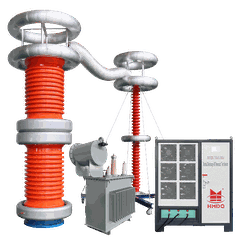
* Variable Frequency Power Supply (for frequency adjustment)
* Excitation Transformer
* Reactor (for resonant inductance)
* Voltage Divider (for high voltage measurement)
* Control and Protection System
IV. Typical Applications
* Withstand voltage testing of high-voltage/ultra-high-voltage cables (e.g., 110kV, 220kV and above)
* GIS equipment testing
* AC withstand voltage testing of large transformers
* Testing of generators, capacitors, and other equipment
V. Core Advantages
* High capacity utilization: Small power supply achieves high voltage output (energy saving)
* Particularly suitable for cable testing: Extremely high efficiency for large capacitive loads
* Good output waveform: Close to sine wave, more standardized testing
* High safety: Low energy during breakdown, low damage to equipment
* Strong adjustability: Resonant matching is achieved through frequency modulation