


Transformer Winding Resistance Tester vs Transformer Comprehensive Tester
A transformer winding resistance test is one specific part of transformer inspection. A comprehensive transformer test covers several electrical and high-voltage test items.
That difference is important when choosing equipment.
A Transformer Winding Resistance Tester is built specifically to measure the DC resistance of transformer windings. It supplies test current, measures the resulting voltage, calculates resistance, and provides functions such as temperature conversion, data storage, automatic testing and discharge protection, depending on the model.
A Transformer Comprehensive Tester or Transformer Comprehensive Test System is designed for a wider test program. It may combine transformer loss testing, DC resistance testing, withstand voltage testing, induced withstand testing, temperature rise testing and other measurements within one test platform.
Goldhome supplies both types of equipment. The transformer testing range includes dedicated DC resistance testers, TTR testers, tan delta testers, SFRA, capacitance/inductance testers, transformer loss testers and transformer comprehensive testing platforms.
The choice therefore depends on what needs to be tested, where the equipment will be used, and how many test items need to be completed on each transformer.
What Is a Transformer Winding Resistance Tester?

Figure 1. Example of a portable HM5002 10A transformer DC winding resistance tester.
A transformer winding resistance tester is a dedicated instrument for measuring the DC resistance of transformer windings.
The basic measurement uses a DC current through the winding and measures the voltage drop across the winding. The resistance is then calculated from the measured values.
For transformer work, the resistance can be very low, particularly on low-voltage windings, so the tester needs suitable current output, resolution, measurement accuracy and protection against the winding's inductive behavior.
Goldhome's product range includes several transformer DC resistance testers. One HM5002 configuration provides selectable test currents of 10A, 5A, 1A, 200mA, 40mA and below 5mA, with a published measurement range from 0.5 mΩ to 200 kΩ depending on the current setting.
Another Goldhome HM5002 winding resistance test set uses 1 mA, 10 mA, 1 A, 5 A and 10 A test-current settings, with a maximum 10 A output.
This type of instrument is designed around one job:
Measure transformer winding resistance accurately and efficiently.
Why Is Transformer Winding Resistance Testing Important?

Figure 2. HM5002 Winding resistance testing during transformer maintenance.
Winding resistance testing is used during transformer manufacturing, installation, commissioning, handover, maintenance and repair.
Goldhome describes DC resistance measurement as a required test for transformer semi-finished and finished products, as well as installation, handover and preventive testing. The test can help identify problems associated with winding connections, welding, conductors and other winding-related conditions.
The measurement can be useful after:
- Transformer manufacturing
- Winding repair
- Tap changer replacement or maintenance
- Transformer installation
- Commissioning
- Transformer handover
- Preventive maintenance
- Transformer overhaul
For example, after changing a tap switch, the winding resistance should be checked again. Goldhome's product information specifically identifies transformer handover, repair and tap-switch changes as applications for winding resistance testing.
What Is a Transformer Comprehensive Tester?

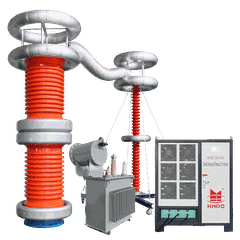
Figure 3. Example of an HM5050 integrated transformer comprehensive test bench.
The term Transformer Comprehensive Tester can refer to equipment that combines several transformer test functions.
The exact scope varies by manufacturer and configuration, so buyers should not select equipment based only on the word "comprehensive."
Goldhome's HM5050 Integrated Transformer Comprehensive Test Bench is a much larger system than a winding resistance tester.
The published HM5050 configuration includes:
- Automatic console
- Variable boost system
- Test transformer
- Three-phase inductive voltage regulator
- Three-phase step-up transformer
- Multiple-frequency generator
- No-load/load tester
- Digital measurement system
- IPC software
The published test items include:
- No-load/load loss
- Power-frequency withstand voltage
- Temperature rise
- Induced withstand voltage
- DC resistance
So DC resistance is one function within the comprehensive system, rather than the main purpose of the entire system.

Type-test laboratory scene: dedicated impulse test equipment for transformer design verification.
Winding Resistance Tester vs Comprehensive Transformer Tester
|
Item |
Transformer Winding Resistance Tester |
Transformer Comprehensive Tester |
|
Main purpose |
DC winding resistance |
Multiple transformer tests |
|
Main measurement |
Winding resistance |
Loss, resistance, withstand, induced, temperature and other tests |
|
Test current |
Dedicated DC current output |
Depends on the integrated test configuration |
|
Portability |
Usually easier to transport |
Usually larger installation |
|
Field maintenance |
Very suitable |
Depends on system configuration |
|
Factory testing |
Suitable for resistance testing |
Suitable for complete routine testing |
|
Test scope |
Narrow and focused |
Broad |
|
Setup |
Relatively simple |
Requires more equipment and connections |
|
Data management |
Resistance test records |
Multiple test records |
|
Power requirements |
Relatively modest |
Larger test-system power requirements |
|
Safety system |
Tester-level protection |
Complete test-system protection |
|
Investment |
Lower |
Higher |
|
Typical user |
Maintenance team, utility, repair workshop |
Transformer manufacturer, testing center, laboratory |
The key distinction is not that one is "basic" and the other is "advanced."
They are designed for different testing scopes.
1. A Winding Resistance Tester Focuses on the Winding
When the testing question is:
"What is the DC resistance of this transformer winding? "
a dedicated winding resistance tester is the appropriate equipment category.
The test can be performed on:
- High-voltage windings
- Low-voltage windings
- Phase windings
- Tap positions
- Other inductive components, depending on the tester
Goldhome's HM5002 series supports different current settings and measurement ranges. Some models also support three-phase measurement.
For a maintenance team, this can be useful because the equipment can be taken directly to the transformer without installing a complete transformer test station.
2. A Comprehensive Tester Covers the Transformer as a Test Object
A transformer is not evaluated by winding resistance alone; the required test scope depends on the transformer type, applicable standards, and customer specification.
A factory routine test may require several measurements.
For example:
Winding resistance
checks the resistance of the winding circuit.
Turns ratio
checks the relationship between transformer windings.
No-load loss
measures transformer losses under the specified no-load condition.
Load loss
measures losses under the specified load condition.
Power-frequency withstand
checks insulation withstand under the specified test voltage.
Induced withstand
uses the required induced-voltage test procedure.
Temperature rise
checks transformer thermal behavior under the required test conditions.
These tests require different electrical conditions and different measurement functions.
That is why a comprehensive transformer test system is substantially different from a winding resistance meter.
3. Goldhome's Winding Resistance Tester Is Already Automatic
One point worth clarifying is the word automatic.
A winding resistance tester does not have to be a manual meter.
Goldhome's automatic transformer DC resistance testers include functions such as:
- Automatic test
- Automatic current selection
- Temperature conversion
- Automatic measurement
- Back-EMF protection
- Data storage
- Printing
USB data transfer
Therefore:
Automatic Winding Resistance Tester ≠ Comprehensive Transformer Tester
Automation refers to how the resistance test is performed.
Comprehensive testing refers to how many different transformer tests the system can perform.
4. Three-Phase Winding Resistance Testing
Three-phase transformers create an additional requirement.
Testing each winding separately can take time, particularly during transformer overhaul.
Goldhome's three-phase DC winding resistance tester is designed for simultaneous measurement of three phases in suitable transformer configurations; confirm compatibility with the winding connection and selected model. The published product information states that all DC resistance data for high- and low-voltage windings can be measured with one connection, and that three phases of a transformer with a neutral point can be measured simultaneously.
The product also describes a magnetic-assist method for certain three-phase, five-column or low-voltage delta-connected transformers and includes demagnetization functions.
This is important because a dedicated winding resistance tester can already provide a fairly high level of automation and three-phase capability.
The buyer should therefore compare the actual specifications rather than assume that a comprehensive test bench is automatically faster for every resistance measurement.

Figure 4. Example of an HM5002-10A three phase DC winding resistance tester
5. Temperature Conversion
Transformer winding resistance changes with temperature.
For meaningful comparison, resistance values may need to be converted to a reference temperature.
Goldhome's winding resistance testers include temperature conversion functions. The product information states that the tester can convert measured resistance to the specified standard temperature.
This is particularly useful when comparing:
- Factory test results
- Commissioning results
- Maintenance results
- Post-repair results
For a winding resistance tester, this is an important part of the instrument's software rather than an additional test system.
6. Winding Resistance Testing After Tap Changer Work
Tap changer maintenance is one situation where a dedicated winding resistance tester becomes particularly useful.
After changing or servicing the tap switch, the resistance should be checked across the relevant tap positions.
Goldhome's product information describes longitudinal testing of DC resistance on on-load regulating transformers and automatic temperature conversion.
For a maintenance workshop, a portable resistance tester can therefore be used repeatedly without bringing the transformer into a complete comprehensive test setup.
7. What a Comprehensive Test Bench Adds
The difference becomes clearer when looking at Goldhome's HM5050.
The HM5050 is specified for power transformers from 50 kVA to 5000 kVA, with listed voltage configurations of 6, 11, 24 and 36 kV/380 V.
Its system includes a three-phase inductive voltage regulator, three-phase step-up transformer and multiple-frequency generator.
The no-load/load tester can measure:
- RMS voltage
- Rectified mean voltage
- RMS current
- Active power
- Power factor
- Frequency
with a published accuracy class of 0.5 for the specified measurement instruments; confirm the exact scope in the configuration-specific specification.
The product parameters list:
- No-load/load loss
- Power-frequency withstand voltage
- Temperature rise
- Induced withstand voltage
- DC resistance
This is a factory test platform, not simply a large winding resistance tester.
8. Field Maintenance: Winding Resistance Tester Has a Clear Practical Role
Consider a maintenance engineer working at a substation.
The transformer has been taken out of service for scheduled maintenance.
The engineer wants to check:
- HV winding resistance
- LV winding resistance
- Tap positions
- Phase balance
A dedicated winding resistance tester can be connected directly to the transformer.
Goldhome's HM5002 equipment includes portable configurations, and one published winding resistance tester weighs 4.7 kg. The product also provides a touch screen, data storage, micro thermal printer and USB storage.
For this type of work, transporting a complete comprehensive test bench would add equipment that may not be required.
9. Transformer Factory Testing: Comprehensive Testing Has a Different Role
Now consider a transformer manufacturer.
The finished transformer may need a complete factory testing sequence.
The test department may need:
- Winding resistance
- No-load loss
- Load loss
- Power-frequency withstand
- Induced withstand
- Temperature rise
A dedicated winding resistance tester can handle item 1.
It cannot replace the equipment required for the remaining tests.
Goldhome's HM5050 is designed around this broader factory testing requirement. Its listed application areas include transformer manufacturing quality control, substation commissioning and maintenance, transformer repair workshops, renewable energy plants, railway traction power systems and R&D laboratories.
10. Comprehensive Testing Requires More Than Measurement Instruments
A comprehensive transformer test system needs to provide the electrical conditions required by each test.
That can involve:
- Voltage regulation
- Voltage boosting
- Test transformers
- Frequency conversion
- Measurement
- Control
- Protection
- Grounding
- Software
Operator controls
Goldhome's HM5050 includes a variable boost system, test transformer and automatic console. Its multiple-frequency generator provides three-phase AC at 150 Hz with 0–800 V in the published configuration.
The physical design of a comprehensive system is generally larger than that of a dedicated winding resistance tester.

Figure 5 The Composition of an HM5050 transformer test bench
11. Equipment Footprint and Installation
A winding resistance tester can usually be moved between transformers.
A comprehensive test system needs a planned testing area.
For the HM5050 configuration, the system includes:
- Automatic Console
- Variable Boost System
- Test Transformer
- Power / Control Cables
- Grounding
- Measurement System
The published accessory list confirms these components as part of the test bench configuration.
A customer planning this type of equipment should therefore consider:
- Workshop area
- Input power
- Transformer positioning
- High-voltage test area
- Grounding
- Safety barriers
- Operator location
- Cable routing
- Maintenance access
A winding resistance tester has far fewer installation requirements.
12. Data Management
A dedicated winding resistance tester mainly needs to manage resistance data.
Goldhome's products provide functions such as:
- Test-result storage
- Printing
- USB export
- Temperature conversion
- Multiple test records
One published HM5002 configuration stores up to 500 sets of data and includes a thermal printer and USB storage.
A comprehensive system has a larger data structure because a transformer may have several test results.
A factory record could contain:
|
Test item |
Result |
|
Transformer ID |
TX-001 |
|
Winding resistance |
Measured |
|
No-load loss |
Measured |
|
Load loss |
Measured |
|
Power factor |
Measured |
|
Withstand test |
Result |
|
Induced test |
Result |
|
Temperature rise |
Result |
This makes a comprehensive test system more relevant when the customer's QA department needs a complete transformer test record
13. Winding Resistance Tester vs Comprehensive Tester: Cost Structure
The two equipment categories also have very different cost structures.
A winding resistance tester mainly contains:
DC current source
Voltage measurement circuit
Resistance calculation
Control system
Display
Protection
Data storage
A comprehensive system may also require:
High-power input
Voltage regulator
Step-up transformer
Test transformer
Frequency generator
Measurement instruments
Automatic control
High-voltage protection
Safety system
Software
Therefore, the investment should be compared against the required test program.
If the customer only needs winding resistance, buying a complete test bench adds equipment that will not be used for that particular test.
If the factory already needs several routine tests, purchasing individual instruments for every test may result in a more complicated testing area.

When Should You Choose a Transformer Winding Resistance Tester?
A dedicated winding resistance tester is usually the more focused equipment choice when the main requirement is:
Transformer maintenance
Check winding condition during scheduled maintenance.
Transformer commissioning
Verify winding resistance before energizing the transformer.
Transformer repair
Check resistance after rewinding or connection repair.
Tap changer maintenance
Measure resistance across tap positions.
Field testing
Carry the tester between substations or transformer sites.
Transformer manufacturing
Perform the DC resistance portion of the factory routine test.
Diagnostic work
Compare resistance between phases or against previous test records.
Goldhome's range includes portable and three-phase winding resistance equipment for these types of applications.
When Should You Choose a Transformer Comprehensive Tester?
A comprehensive transformer test system becomes relevant when the customer needs several tests in one testing environment.
Typical requirements include:
No-load loss
Load loss
DC resistance
Power-frequency withstand
Induced withstand
Temperature rise
Other customer-specified routine tests
It is particularly relevant to:
Transformer factories
Large repair workshops
Electrical testing laboratories
Utility testing centers
R&D facilities
Goldhome's HM5050 is published for power transformer manufacturing quality control, substation maintenance, industrial facilities, transformer repair, renewable energy plants, railway traction systems and R&D laboratories.
Can a Winding Resistance Tester and Comprehensive Tester Be Used Together?
Yes.
In many transformer factories and service companies, there is no need to treat them as mutually exclusive.
A factory may use the comprehensive system for routine testing while keeping a dedicated winding resistance tester for:
- Troubleshooting
- Maintenance
- Repair
- On-site inspection
- Repeat measurements
- Independent verification
For example:
Factory routine testing
Transformer Comprehensive Test System
→ No-load/load loss
→ Withstand voltage
→ Induced withstand
→ Temperature rise
→ DC resistance
Field maintenance
Transformer Winding Resistance Tester
→ HV winding resistance
→ LV winding resistance
→ Phase comparison
→ Tap position checks
This combination gives the testing team a fixed production system and a mobile diagnostic instrument.
Practical Comparison for Buyers
|
Customer requirement |
Suitable equipment |
|
Only DC winding resistance |
Winding Resistance Tester |
|
Transformer maintenance |
Winding Resistance Tester |
|
Post-repair resistance test |
Winding Resistance Tester |
|
Tap changer resistance testing |
Winding Resistance Tester |
|
Three-phase resistance testing |
Three-Phase Winding Resistance Tester |
|
High-volume resistance measurement |
Automatic Winding Resistance Tester |
|
No-load/load loss testing |
Transformer Loss Tester / Comprehensive System |
|
Withstand voltage testing |
Comprehensive Test System |
|
Induced withstand testing |
Comprehensive Test System |
|
Temperature rise testing |
Comprehensive Test System |
|
Several routine tests |
Comprehensive Transformer Test System |
|
Transformer factory |
Comprehensive System + Dedicated Testers |
|
Substation field service |
Portable Winding Resistance Tester |
|
Repair workshop |
Winding Resistance Tester or combined equipment |
|
R&D laboratory |
Equipment selected according to test program |
What Should You Tell Goldhome Before Requesting a Quotation?
For a winding resistance tester, the basic information should include:
Transformer information
- Transformer type
- Rated capacity
- HV voltage
- LV voltage
- Single-phase or three-phase
- Winding connection
- Tap changer type
- Number of tap positions
Testing requirements
- Required test current
- Resistance range
- Number of phases
- Simultaneous or sequential measurement
- Temperature conversion
- Data storage
- Printing
- USB export
For a comprehensive transformer test system, more information is required:
- Transformer capacity range
- HV/LV voltage
- Frequency
- Impedance
- Required no-load/load test
- Withstand voltage requirement
- Induced test requirement
- Temperature rise requirement
- DC resistance requirement
- Factory input power
- Required automation
- Test report format
- Applicable standards
This information determines whether the project needs a dedicated tester, several individual instruments, or a complete integrated test system.
Goldhome's Transformer Testing Approach
Goldhome's transformer equipment is organized around different levels of testing.
For a specific measurement, we provide dedicated equipment such as:
Transformer DC Resistance Tester
Transformer Turns Ratio Tester
Transformer Tan Delta Tester
Transformer Capacity Loss Tester
Transformer Load and No-Load Loss Tester
SFRA
Capacitance and Inductance Tester
Goldhome's transformer tester category presents these as separate equipment types because each one addresses a different transformer parameter.
For a broader factory testing requirement, Goldhome offers the HM5050 Integrated Transformer Comprehensive Test Bench.
The HM5050 is published with a 50 kVA–5000 kVA transformer capacity range and listed voltage configurations of 6, 11, 24 and 36 kV/380 V. Its test scope includes no-load/load loss, power-frequency withstand, temperature rise, induced withstand and DC resistance.
That makes the distinction quite clear:
Winding Resistance Tester
→ One important transformer test, handled efficiently.
Transformer Comprehensive Test System
→ Several transformer tests, handled through one coordinated test platform.
Final Selection Guide
If your main question is:
"How do I measure the resistance of this transformer winding? "
Choose a Transformer Winding Resistance Tester.
If your question is:
"How do I complete the required factory tests for this transformer? "
Look at a Transformer Comprehensive Test System.
A winding resistance tester can be highly automated, support three-phase measurement, store test data and provide temperature conversion. Goldhome's HM5002 products demonstrate that a dedicated resistance tester can already handle sophisticated resistance-testing requirements.
A comprehensive tester serves a different purpose. It brings the power source, voltage regulation, measurement equipment, high-voltage test components and control system together for a wider transformer test program.
For Goldhome, the equipment selection starts with the customer's actual test list:
Winding resistance only
→ Dedicated Winding Resistance Tester
Winding resistance + several other routine tests
→ Comprehensive Transformer Test System
Field maintenance
→ Portable transformer testers
Factory production testing
→ Integrated test bench, supported by dedicated instruments where needed
The important point is not to buy a larger system simply because it can perform more tests. The equipment should match the transformer, the test procedure, the testing frequency and the working environment.