

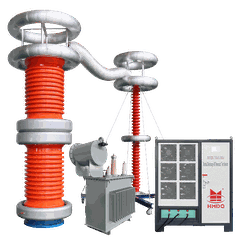


In the field of preventive testing for electrical safety tools and equipment, the insulation mat withstand voltage test bench serves as a critical piece of equipment for verifying the insulation performance of insulation mats-the "last line of defense" in substations. Its proper operation directly impacts the accuracy of test results and the safety of personnel. Leveraging years of expertise in high-voltage testing technology and industry-academia-research collaborations with Wuhan University and the State Grid Electric Power Research Institute, Wuhan Goldhome Hipot Electric Co., Ltd. provides reliable testing solutions for the global power industry through its insulation mat withstand voltage test bench, which features precise control, multiple safety protections, and user-friendly operation. This article provides a comprehensive analysis of the key considerations for the Goldhome insulation mat withstand voltage test bench.
Pre-Test Preparations
Goldhome's insulation mat withstand voltage test bench features a SUS304 stainless steel work surface and high-quality conductive fabric electrodes, effectively preventing metal powder contamination and damage to the sample surface. Before starting the test, operators must complete the following preparations:
Grounding verification is the top priority. Before operation, ensure that the control cabinet and test transformer are reliably grounded, with a grounding wire cross-sectional area of no less than 4 mm², and that the grounding resistance meets requirements. Goldhome engineers repeatedly emphasize during training: "Before operating the instrument, ensure proper grounding and maintain a minimum of three people supervising each other."
Checking electrode contact is critical. Place the insulation mat to be tested flat in the center of the test bench, and adjust the high-voltage and ground electrodes to ensure tight contact with the surface of the insulation mat. The electrodes are designed with conductive fabric, allowing them to adhere closely to the sample surface during testing, ensuring conductivity while preventing damage. The test environment temperature should be maintained between -25°C and +40°C, with relative humidity below 90%.
Test Parameter Settings and Process Monitoring
The Goldhome Insulation Mat Withstand Voltage Test Bench is equipped with a high-precision stepper motor-controlled voltage regulator, enabling precise control of the voltage ramp-up process. Operators must set test parameters according to the voltage rating of the insulation mat under test: Insulation mats for high-voltage environments must withstand a 15 kV power-frequency withstand voltage for 1 minute without breakdown.
Before starting the test, it is crucial to confirm that the voltage regulator is set to zero. After pressing the high-voltage start button, the voltage should be gradually increased according to the voltage rise rate specified by national standards, while closely monitoring the digital voltmeter reading. The Goldhome test bench is equipped with an overcurrent protection mechanism-if the test sample breaks down, the high-voltage output is immediately cut off to ensure operator safety.
During the test, operators must maintain a sufficient distance from the high-voltage area and must not touch the test sample or the electrodes. Once the voltage stabilizes at the target value and the timer starts, all personnel must retreat to a safe area and monitor the test progress via the control panel.
Post-Test Safety Procedures
Upon completion of the test, the Goldhome Insulation Mat Withstand Voltage Test Bench features an automatic voltage reduction and return-to-zero function; however, operators must still follow strict safety procedures. First, the equipment will automatically cut off the high voltage and reduce it to zero; at this point, operators must not approach the test specimen immediately. Goldhome engineers emphasize: "After testing, the test specimen may retain a significant amount of charge internally; it must be fully discharged to avoid the risk of electric shock."
The correct discharge procedure includes: using a discharge rod to discharge the test specimen through the resistive rod, then grounding the discharge rod directly to discharge it, repeating this process at least twice. Only after complete discharge is achieved may the operator replace or remove the insulation mat under test.
Routine Maintenance and Periodic Calibration
To ensure testing accuracy and safety, the Goldhome Insulation Mat Withstand Voltage Test Bench requires regular maintenance. The conductive fabric electrodes must be kept clean and dry to prevent oil contamination from affecting conductivity. The stainless steel work surface may be wiped with a soft cloth dampened with a neutral detergent; the use of abrasive materials is prohibited.
The equipment should be sent for calibration once a year to ensure that the voltage measurement error is controlled within the range of ±(1.0%U + 0.1%Umax) and the leakage current measurement error does not exceed ±(1.0%I + 0.1 digits). Goldhome provides lifetime maintenance and warranty services. Standard products are shipped within 7–30 days, and our after-sales team promises to respond to remote guidance requests within 1 hour and provide the best solution within 24 hours.


